Sign in to unlock exclusive benefits


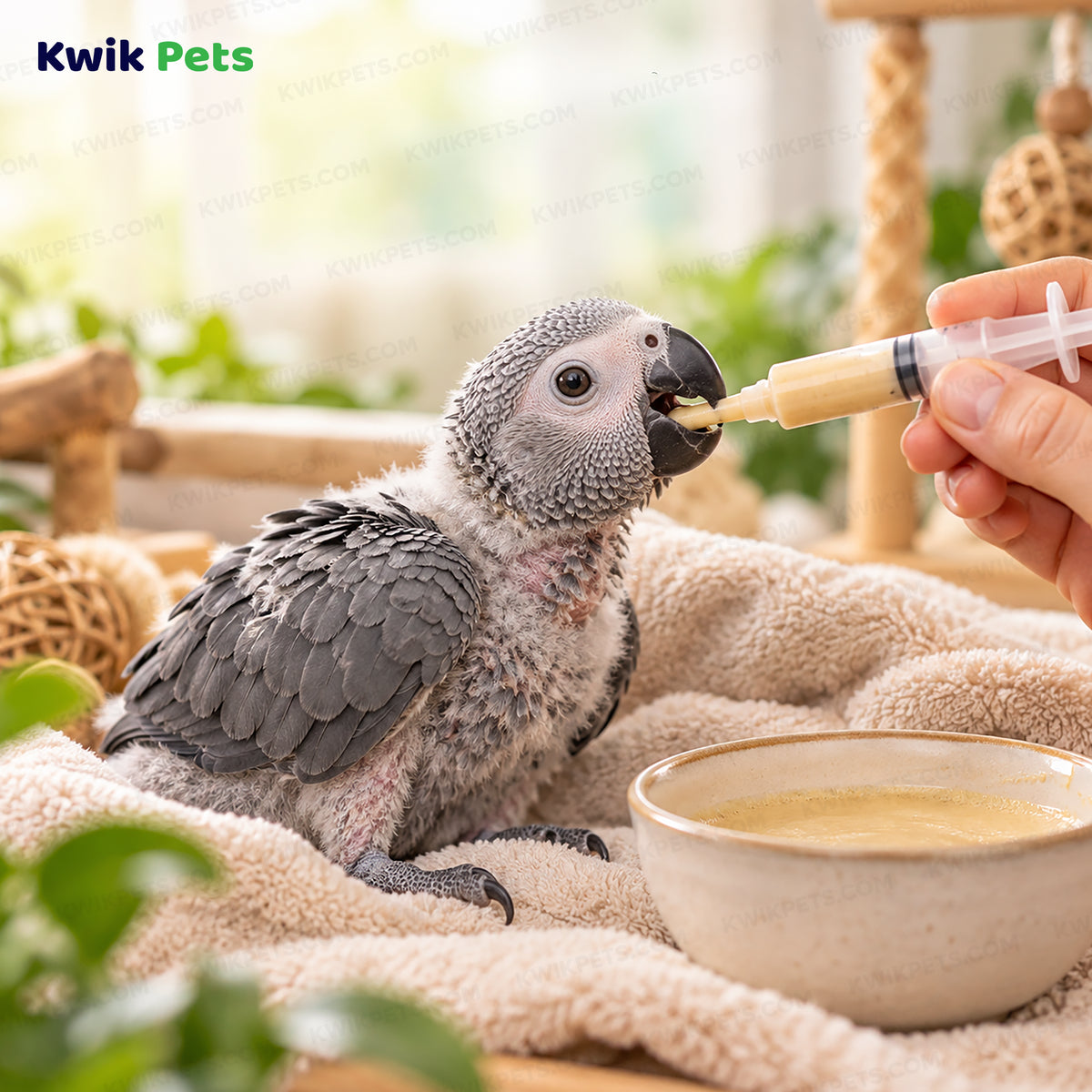
Give your baby bird the best nutritious start they could ever get with the Kaytee Exact Hand Feeding Formula. This trusted formula is one of the best food for pet birds among the crowd of so many other brands that your baby birds need to grow strong, healthy, and vibrant. Plus it is used by professional breeders, veterinarians, and conservationists worldwide. So, your little chickling will now thank you for giving them such a good food option. With probiotics for digestion and high-quality ingredients for nourishment, Kaytee Exact Hand Feeding Formula for Baby Birds makes feeding and digestion a breeze.
|
Crude Protein (min.) |
22.0% |
|
Crude Fat (min.) |
9.0% |
|
Crude Fiber (max.) |
5.0% |
|
Moisture (max.) |
10.0% |
|
Omega-3 Fatty Acids (min.) |
0.5% |
|
Total Bacillus Species (min.) |
250,000 CFU/g |
United States
Hand Feeding Formula for Baby Birds
Macaw, Parrot, Parakeet, Lovebird, Conure, Cockatoo, Cockatiel, Amazon, African Grey
Powder
1. Feed on a Routine Schedule
2. Observe the Crop
3. Use Clean Feeding Tools
4. Feed According to the Bird’s Response
5. How Much to Feed
6. Clean Equipment After Each Feeding
7. Hand-Feeding Formulas
8. Encouraging Weaning
When the bird starts exploring:
9. Monitor Weight and Health
If weight gain stops or stalls:
10. Address Weight Loss Immediately
Investigate causes of weight loss:
11. Nutrient Intake
A chick may not gain weight if:
12. Dietary Changes
When switching formulas:
13. Crop Slow-Down
Temporary diet adjustment:
14. Monitor Droppings
15. Important Crop Care Notes