


📌 KWIK SUMMARY
The best cat food for diabetic cats should be high in animal protein, low in carbohydrates, and rich in moisture to help support healthy blood sugar levels and maintain lean muscle. Wet food for diabetic cats is generally a better option than dry food because it provides better hydration and typically contains fewer carbohydrates. Pair a balanced diet with portion control, regular veterinary checkups, and a consistent feeding schedule to help manage feline diabetes effectively.
When the vet drops the “your cat’s diabetic” bomb, it feels like someone just handed you a pop quiz you never studied for. Suddenly, you’re googling ingredient lists and looking for the best cat food for diabetic cats like a maniac. But honestly? Bit of a routine, right food, and your little fluff is still running the place like the boss they are. Choosing the best cat food for indoor cats becomes even more important when diabetes is involved, since indoor cats are often less active and need carefully balanced nutrition to manage weight and blood sugar.
Understanding Diabetes in Cats
What Is Feline Diabetes?
Feline diabetes (diabetes mellitus) happens when a cat's body either doesn't produce enough insulin or can't use the insulin it produces effectively. Insulin is the hormone that moves glucose out of the bloodstream and into cells for energy. When that process breaks down, glucose builds up in the blood instead of fueling the body, leading to high blood sugar (hyperglycemia).
Signs Your Cat May Have Diabetes
Diabetes symptoms can creep in gradually, so it's easy to miss the early signs. Watch for:
- Increased thirst - Drinking noticeably more water than usual.
- Increased urination - Larger clumps in the litter box or more frequent trips.
- Increased hunger - Acting ravenous even after eating.
- Lethargy - Less interest in play, more time sleeping.
- Poor coat condition - Dull, greasy, or unkempt fur.
- Vomiting or loss of appetite - Can signal a more advanced or urgent complication and warrants immediate vet attention.
If you notice two or more of these signs, it's time for a vet visit and a blood glucose check - early diagnosis makes management significantly easier.
What Should Diabetic Cats Eat?
At a basic level, a diabetic cat's diet should aim to keep blood sugar as stable as possible while supporting healthy weight and muscle mass. That means:
- Low carb cat food - Minimal grains, starches, and sugars, since carbs are what spike blood glucose fastest.
- High-quality animal protein - Real meat or fish as the primary ingredient, to preserve lean muscle and satisfy a cat's natural carnivore biology.
- Moderate, healthy fat - A legitimate energy source for cats that doesn't drive blood sugar spikes the way carbs do.
- High moisture content - Supports hydration, which matters more in diabetic cats since excess urination increases fluid loss.
|
KWIK NOTE: None of the products below are prescription or veterinary-therapeutic diabetic cat food. They're included here because they follow the same core nutritional principles that matter for diabetic cats - high protein, low carbohydrate, minimal starch fillers - which makes them reasonable supportive options for many diabetic cats. |
Top 5 Cat Food & Treat Products For Diabetic Cats
1. Weruva - Cats in the Kitchen "Kitchen Cuties" Variety Pack (Wet)
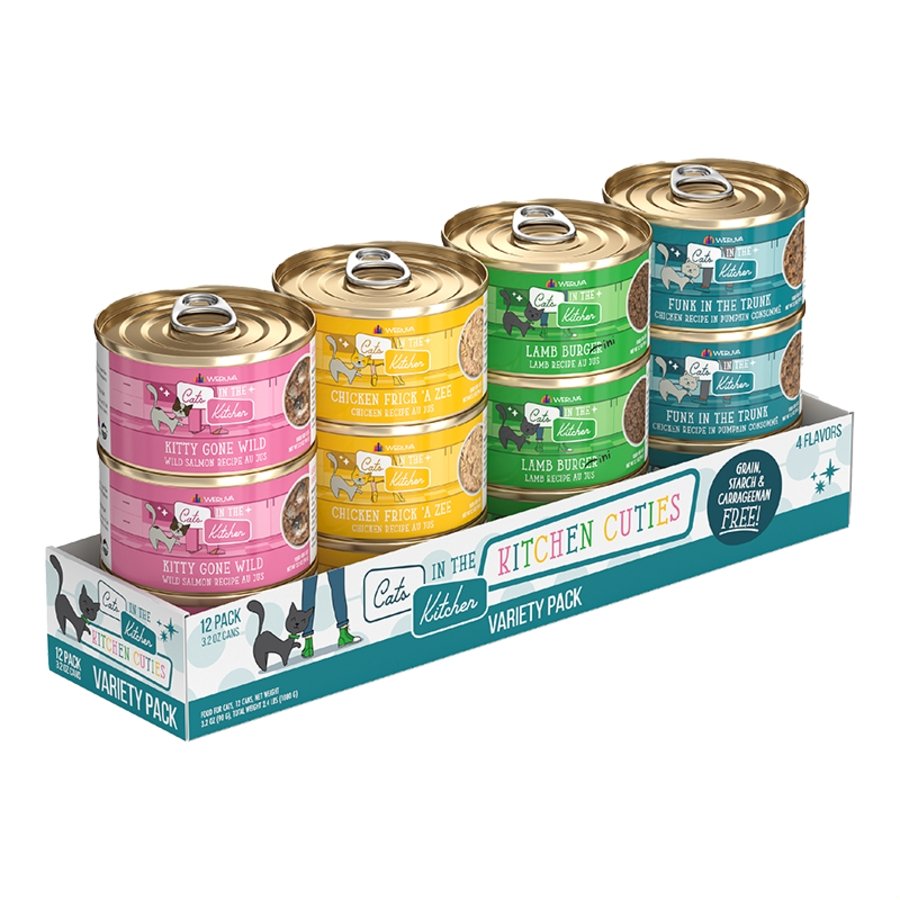
Weruva Cats in the Kitchen Cuties Variety Pack Canned Cat Food 3.2-oz Cans 12 Count
This variety pack brings together top-selling Weruva recipes made with cage-free chicken, wild-caught tuna, and grass-fed beef in a savory au jus, all high in protein, low in carbs, and completely starch-free.
Key Benefits:
- High-protein, starch-free recipes
- Savory au jus texture delivers extra hydration
- Grain-free, with no corn, wheat, or soy
2. Tiki Pets - Born Carnivore High Protein Dry Cat Food (Deboned Chicken & Egg)
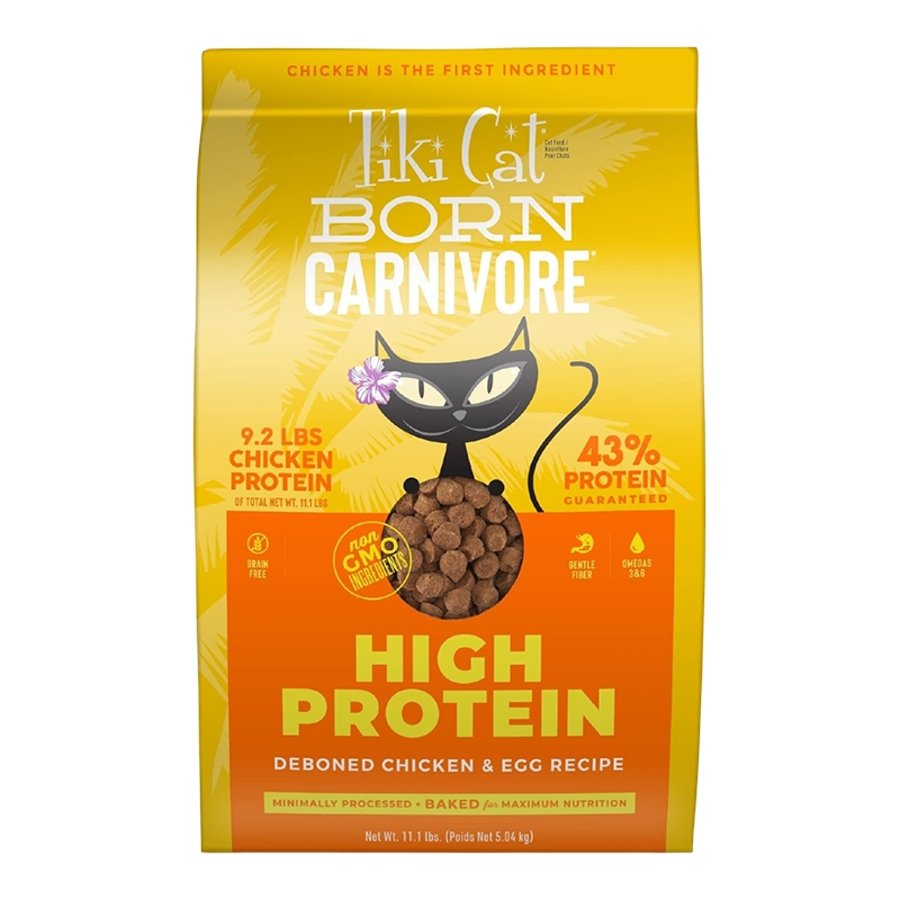
Tiki Pets Cat Born Carnivore High Protein Dry Cat Food Deboned Chicken & Egg 11.1-lb
This grain-free kibble leads with real deboned chicken and delivers 43% crude protein, making it one of the higher-protein dry options on the market. It's a solid pick if your cat strongly prefers dry food, though wet food is still the better default for diabetic management overall.
Key Benefits:
- 43% protein with real chicken as the first ingredient
- Grain-free carb sources (peas, chickpeas) instead of corn or wheat
- No processed plant proteins like corn gluten
3. Instinct - Original Grain-Free Dry Cat Food, Real Chicken Recipe

Instinct Original Grain-Free Dry Cat Food Real Chicken Recipe 5-lb
Instinct's formula is built around 81% real animal ingredients and nutritious oils, with 0% grain. It's a high-protein dry option for cats who need the crunch of kibble, with a cleaner ingredient profile than most conventional dry foods.
Key Benefits:
- Cage-free chicken as the first ingredient
- 81% animal ingredients, 0% grain
- No corn, wheat, soy, or by-product meal
4. Stella & Chewy's - Freeze-Dried Raw Dinner Morsels, Tummy Ticklin' Turkey
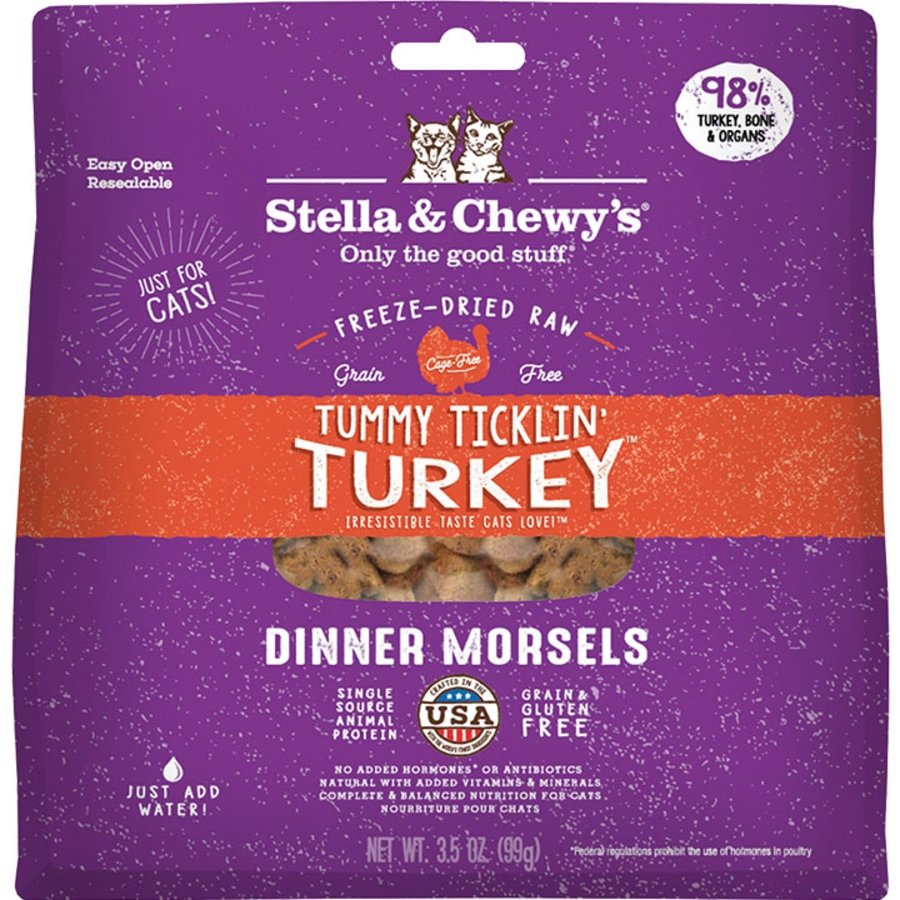
Stella & Chewy's Freeze-Dried Raw Dinner Morsels Cat Food Tummy Ticklin’ Turkey 3.5-oz
Made with 98% cage-free turkey, organs, and bone, this freeze-dried raw option is completely pea-free, lentil-free, and potato-free - skipping the legume starches that sneak into a lot of "grain-free" foods.
Key Benefits:
- 98% turkey, organs, and bone - very low in plant-based fillers
- Pea-free, lentil-free, and potato-free
- Added taurine for heart health
5. PureBites - Freeze Dried Pure Cat Treats, Chicken Breast
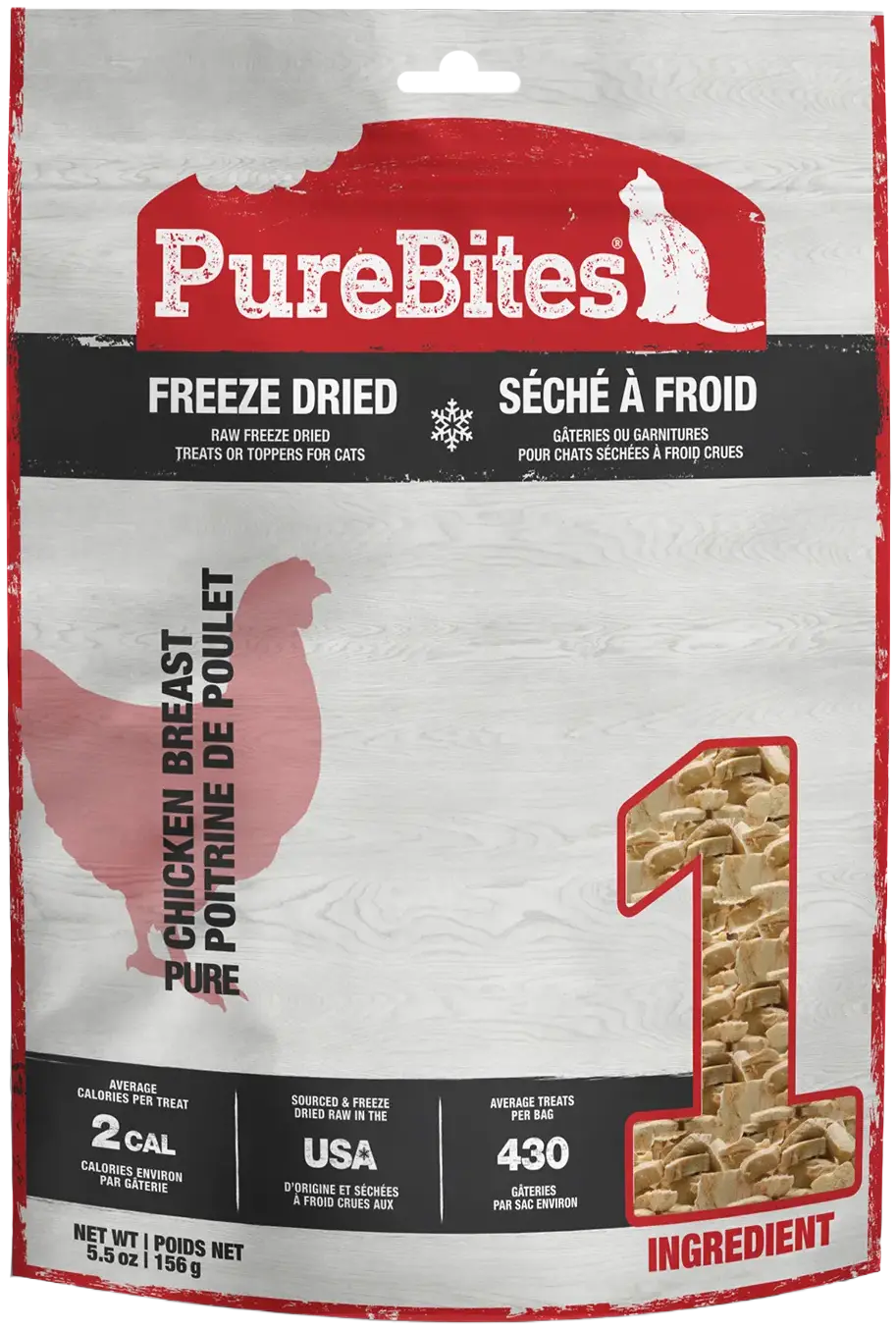
PureBites Chicken Breast Freeze-Dried Pure Cat Treats 5.5-oz
A single-ingredient treat: just freeze-dried chicken breast, nothing else. Because it has no added starch, sugar, or filler, it can be one of the safer treat options for a diabetic cat when used in moderation - though it's a treat/topper, not a meal replacement.
Key Benefits:
- 100% pure chicken breast, no fillers or sweeteners
- Around 2 calories per treat - easy to portion control
- High protein, near-zero carbohydrate
Wet Food vs Dry Food for Diabetic Cats
Is Wet Food Better Than Dry Food for Diabetic Cats?
In most cases, yes - wet food is generally the better choice for diabetic cats. It's naturally higher in moisture and typically lower in carbohydrates than dry kibble, which needs starch as a binding agent to hold its shape.
That said, some cats strongly prefer dry food or have dental/feeding routines built around it, so a high-protein, low-carb dry option (used carefully and portioned) can still work for certain cats under veterinary guidance.
| Factor | Wet Food | Dry Food |
| Moisture Content | High (approximately 70-85%) | Low (approximately 6-10%) |
| Typical Carbohydrate Content | Lower; often under 10% (dry matter basis) | Higher; typically contains starch as a binder |
| Hydration Support | Helps replace fluids lost through increased urination | Limited hydration support; cats may not drink enough water |
| Calorie Control | Easy to portion by can or pouch | More likely to be overfed, especially with free-feeding |
Foods Diabetic Cats Should Avoid
Certain foods and ingredients can undo the hard work of a well-managed diabetic diet almost instantly. Steer clear of:
- Bread, crackers, pasta, and cereal - Pure carbohydrate with little to no nutritional value for a cat.
- Semi-moist treats and pouches - Often contain sugar, corn syrup, or propylene glycol to stay soft.
- High-carb "light" or "weight management" foods - Many cut calories by adding fiber and carb fillers rather than protein, which can backfire for diabetic cats.
- Milk and dairy products - Most cats are lactose intolerant, and dairy adds unnecessary sugar (lactose).
- Grain-heavy dry kibble - Corn, wheat, and rice high on the ingredient list signal a higher-carb formula.
5 Easy Homemade Cat Food Ideas for Diabetic Cat
1. Boiled Chicken Breast Meal
Lean protein with almost no carbs, boiled chicken helps diabetic cats maintain stable blood sugar.
How to Prepare
Boil skinless chicken breast until fully cooked. Shred into small pieces.
Feeding Tip
Serve plain without seasoning. Offer in small, measured portions.
2. Steamed Fish (Salmon or Tuna)
Rich in protein and omega-3s, steamed salmon or tuna supports energy and overall health.
How to Prepare
Steam fresh salmon or tuna until cooked through. Flake into small bites.
Feeding Tip
Avoid adding salt or oil. Serve occasionally as fish should not be the sole protein.
3. Turkey and Pumpkin Mix
Ground turkey provides protein while pumpkin adds fiber for healthy digestion.
How to Prepare
Cook ground turkey in water (no seasoning). Mix with plain pumpkin puree.
Feeding Tip
Start with a spoonful of pumpkin to avoid loose stools.
4. Egg and Chicken Combo
Eggs add essential amino acids, and chicken offers lean meat for balanced protein.
How to Prepare
Scramble or boil an egg (no butter/oil). Mix with shredded boiled chicken.
Feeding Tip
Serve as an occasional protein boost, not a daily replacement.
5. Homemade Bone Broth with Meat Shreds
Bone broth keeps cats hydrated, and added meat shreds give extra protein.
How to Prepare
Simmer chicken or turkey bones in water for hours. Remove bones, add shredded meat.
Feeding Tip
Cool completely before serving. Use as a topper over regular meals.
Why Diet Is Important for Diabetic Cats
Honestly, if you’ve got a diabetic cat, you can’t just toss any old kibble in their bowl and call it a day. They need grub that keeps their blood sugar on a nice, even keel—no wild rollercoaster rides. Give ’em the wrong stuff, and suddenly you’re dealing with a whole mess of diabetes drama that nobody wants. It just makes everything harder, for you and your furry little buddy.
The key goals of a diabetic cat’s diet:
-
Low carbohydrates – to prevent blood sugar spikes.
-
High protein – to maintain muscle mass and energy.
-
Moisture-rich or hydrating – to support kidney and urinary health.
- Natural ingredients – to avoid fillers, sugars, and harmful additives.
Including high-protein options like freeze dried cat food can help meet these goals effectively.
The Challenge With Many Cat Foods
A ton of natural cat foods out there are basically carb bombs in disguise. Doesn’t matter how many “natural” stickers they slap on the bag, if you flip it over, there’s usually a laundry list of grains, starches, or some sneaky sugar tucked in.
These products are not great if your cat’s battling diabetes, right? You want something that’s straight-up simple, more like what cats actually evolved to eat. That’s where PureBites Freeze Dried Cat Food totally nails it, minimal fuss, high in protein, none of that junk your cat’s pancreas will hate you for.
Common Mistakes to Avoid When Feeding Diabetic Cats

1. Feeding High-Carb Treats (Like Biscuits or Bread-Based Snacks)
Carbs hit your cat’s system like a sugar bomb—blood glucose goes up fast, and there goes all your hard work keeping things level. Even that “just a taste” of something carby? Yeah, it can totally wreck the balance.
Stuff to skip: bread, crackers, cookies (duh), pasta, or honestly, most of those store-bought cat treats loaded with grains, starches, or sneaky sweet stuff. Not worth it.
Want to play it safe? Go for treats packed with protein, like PureBites Freeze Dried Treats for Cats
2. Overfeeding — Even With Healthy Treats
Just because something’s labeled “diabetic-friendly” doesn’t mean you can go wild with it. Piling on the calories (even from the so-called good stuff) will pack pounds onto your cat, and that’s basically rolling out the red carpet for all sorts of diabetes drama.
Here’s the deal: chubby cats and insulin do not get along. The chunkier your cat, the trickier it gets to keep their diabetes in check. Honestly, you’re not doing them any favors with a heavy paw on the treats.
So, pro tip: actually measure out those snacks and meal toppers.
3. Ignoring Portion Sizes for Toppers and Treats
It’s tempting to toss your cat a little extra here and there—what’s the harm, right? But, those “just a bit more” moments sneak up on you. Before you know it, all those extra treats and toppers (even the so-called healthy ones) pile up. Suddenly, your cat’s not just getting spoiled, they’re blowing right past their daily calorie limit.
What to do:
-
Check feeding guidelines.
-
Track how much you give as treats
-
Use PureBites sparingly as a reward or flavor booster, not the bulk of the diet.
Why Weight Control Matters for Diabetic Cats?
Weight and diabetes are tightly linked in cats. Excess body fat makes cells more resistant to insulin, which is one of the biggest drivers of Type 2 diabetes in the first place, and it makes an already-diagnosed cat much harder to regulate.
On the flip side, getting an overweight diabetic cat down to a healthy weight can sometimes reduce their insulin needs significantly, and in some cases even lead to diabetic remission.
Weight loss in diabetic cats should always be gradual and vet-supervised - cats are uniquely prone to a dangerous liver condition (hepatic lipidosis) if they lose weight too quickly or stop eating altogether. Pair portion-controlled, high-protein food with regular vet check-ins to track both weight and glucose trends together, rather than focusing on one without the other.
Conclusion
Picking the best cat food for diabetic cats? It’s kind of a big deal—basically, it’s mission-critical for keeping your little furball healthy. You want grub that’s loaded with protein, barely any carbs, and packs in some moisture (no, dry kibble all day isn’t gonna cut it). That combo helps keep their blood sugar from spiking all over the place.
Don’t forget:
- Stick to a schedule
- Measure out those portions (no free-for-alls)
- And actually go to the vet sometimes.


