








- Learning how much puppy food to feed is very important as it can impact their years to come.
- Feeding a puppy based on basis of their body requirements helps set them up for a better life.
- Puppies need puppy food to grow healthily. They need more protein, fat, and calories than adult dogs.
Bringing home a puppy feels like adopting a tornado with paws. One minute they're chewing your shoes, next they're melting your heart. But figuring out how much puppy food to feed? That's the real challenge.
It's tempting just to pile up the kibble, but nope, you gotta be smart about it. Puppies grow fast, like blink-and-you-miss-it fast. Feed them too much, and you're looking at future health problems. Underfeed them, and they might not grow strong and healthy.
Feeding your puppy is part science, part art, and a whole lot of paying attention. Get answers to how much to feed based on age, weight, and breed size in this blog. You'll also find:
- Helpful charts
- Feeding schedules
- Tips, and product examples to make mealtime stress-free.
What Can Puppies Eat?
Mother's Milk & Puppy Formula (Newborn - 3 Weeks)
Newborn puppies depend fully on their mother's milk. It provides nutrients and antibodies that protect them from disease. If the mother is not available, use a vet-approved puppy milk replacer. Never give cow's milk because it can upset their stomach.
When Can Puppies Eat Wet Food?
At around 3 to 4 weeks, puppies can start on soft, healthy dog food. Mix warm water with puppy kibble or use wet dog food. The texture should be soft and easy to lick.
How to Wean Puppies (3–8 Weeks)
Between 3 and 8 weeks, slowly reduce liquid and increase solid food. By 8 weeks, most puppies can eat dry or wet puppy food comfortably.
Why Proper Feeding Matters for Puppies?
- Bone & joint health: If you don't get the calcium and phosphorus thing right, especially with those giant fluffy goofballs, their skeletons can go sideways real fast.
- Brain & eye development: DHA basically powers up their little brains and helps them see the world clearly. It's like giving your pup a pair of invisible glasses and a mini computer for a brain
- Energy for play: Puppies burn calories very fast. Therefore, food is a major requirement for their zoomies. According to AAFCO, growing puppies require 22% protein and 8.5% fat (minimum) in their diet - much higher than adult dogs.
How Much Puppy Food to Feed by Age?
Every puppy passes through growth stages. Their food intake changes accordingly. The chart below helps you determine how much you should feed your puppy.
Puppy Feeding Chart by Age
| Puppy Age | Meals per Day | Portion Guide |
| 6–12 weeks | 4 meals | Small frequent meals |
| 3–6 months | 3 meals | Slightly larger meals |
| 6–12 months | 2 meals | Controlled portions |
| 12+ months | 2 meals | Adult portions |
Rule of thumb: Divide the daily recommended amount by the number of meals. Puppies shouldn't free-feed because it can lead to overeating.

How Much to Feed Puppy by Weight?
A puppy's weight is the easiest way to gauge food quantity. Most dog food brands give feeding guidelines on the bag, but here's a general puppy feeding chart by weight:
Puppy Feeding Chart by Weight
| Puppy Weight | Daily Food Amount (Dry Kibble) |
| 5 lbs | ½ – ⅔ cup |
| 10 lbs | ¾ – 1 ¼ cups |
| 20 lbs | 1 ¼ – 2 cups |
| 40 lbs | 2 ½ – 3 ½ cups |
| 60 lbs | 3 ⅓ – 5 cups |
| 80 lbs | 4 ¼ – 6 cups |
| 100 lbs | 5 – 7 cups |
Always check the food label for calories per cup because not all kibble has the same density.
Breed Size & Feeding Amounts
Small, medium, and large breeds all grow differently. Here's a puppy food chart by breed size:
| Breed Size | Adult Weight Range | Feeding Guidelines |
| Small (Yorkie, Chihuahua) | Under 20 lbs | ½ – 1 ½ cups per day, split into 3–4 meals |
| Medium (Beagle, Cocker Spaniel) | 20–50 lbs | 1 ½ – 2 ½ cups per day, split into 3 meals |
| Large (Labrador, Golden Retriever) | 50–100 lbs | 2 ½ – 4 ½ cups per day, split into 3 meals |
| Giant (Great Dane, Mastiff) | 100+ lbs | 4–8 cups per day, split into 3 meals |
Top Puppy Dog Food Options
Feeding the right food is as important as feeding the right amount. Here are a few trusted options:
1. IAMS Smart Small & Toy Breed Puppy Dry Dog Food Real Chicken 7-lb
Our top pick from the dry dog food category is this product from IAMS. This dry puppy food is one of the best affordable dog foods specially made for small and toy breeds. Real, farm-raised chicken is the first ingredient. It contains 22 key nutrients similar to those found in mother's milk. The formula includes omega-3 DHA to support healthy brain development. It also provides quality protein to help build strong muscles.
Things to Consider
- Designed for small and toy breed puppies
- Real chicken as the first ingredient
- Includes 22 essential nutrients
- Veterinarian-recommended formula

IAMS Proactive Health Smart Puppy Dry Dog Food Real Chicken 7-lb
2. Nutro Natural Choice Lamb & Brown Rice Puppy Dry Food 4.5-lb
This budget friendly dog food formula is made with lamb as the first ingredient. It includes lamb meal, brown rice, barley, and oatmeal for balanced nutrition. The recipe contains DHA to support brain and eye development during early growth. It also includes beet pulp for digestive support and antioxidants like Vitamin E and Selenium for immunity. The food is oven-dried and crafted without corn, wheat, or soy protein.
Things to Consider
- Made for large breed puppies
- Lamb is the first ingredient
- Contains DHA for brain and eye support
- Includes natural prebiotic fiber
- No corn, wheat, or soy protein

Nutro Natural Choice Lamb & Brown Rice Puppy Dry Food 4.5-lb
3. Instinct Raw Meals Grain-Free Freeze-Dried Puppy Food Chicken Recipe 14-oz
This freeze-dried puppy food features responsibly sourced protein as the first ingredient. It is made with 85% meat and organs and 15% non-GMO vegetables and fruits. The recipe supports lean muscles and strong bones. It also promotes healthy digestion, immune function, and skin and coat health. The high-protein formula supports energy and vitality.
Things to Consider
- Grain-free freeze-dried recipe
- 85% meat and organs
- No antibiotics or added hormones
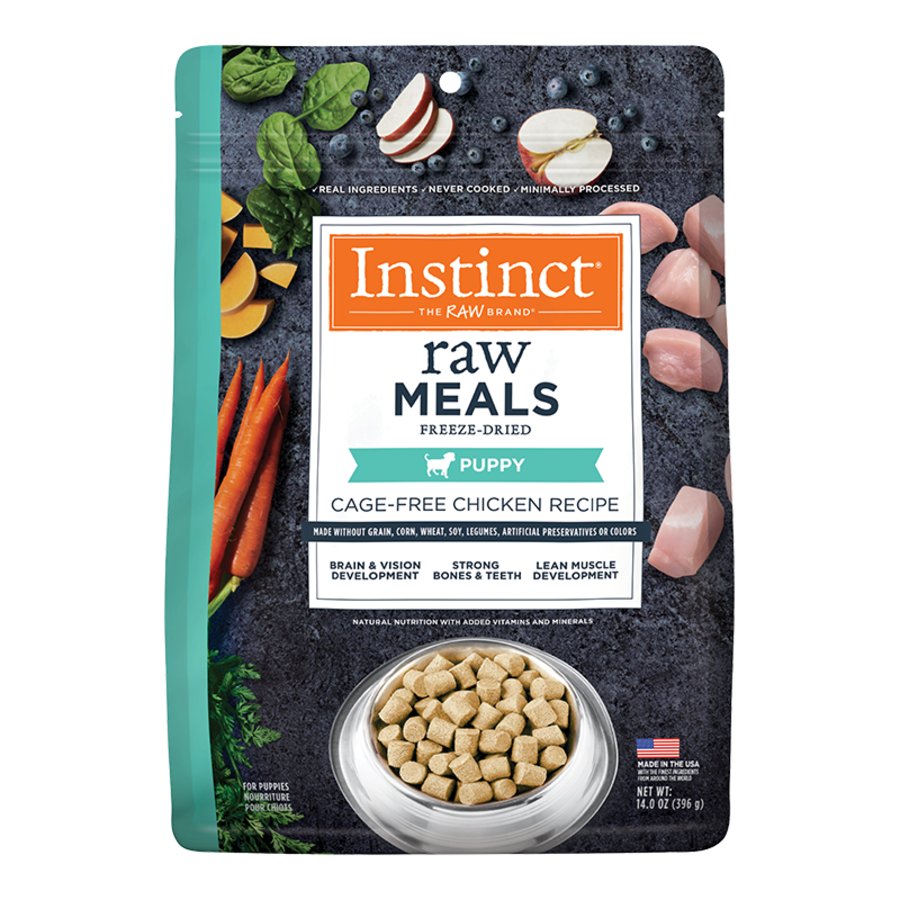
Instinct Raw Meals Grain-Free Freeze-Dried Puppy Food Chicken Recipe 14-oz
4. Canidae Pure Goodness Grain-Free Puppy Dry Food Real Salmon & Sweet Potato Recipe 4-lb
One of the best dry dog foods that uses wild-caught salmon as the first ingredient. It delivers omega fatty acids to support skin and coat health. The recipe is made with 10 or fewer key ingredients. It contains no corn, wheat, soy, artificial flavors, colors, or preservatives. Every batch undergoes comprehensive testing to ensure safety and nutrient consistency.
Things to Consider
- Wild-caught salmon as first ingredient
- 10 or fewer key ingredients
- Grain-free formula

Canidae Pure Goodness Grain-Free Puppy Dry Food Real Salmon & Sweet Potato Recipe 4-lb
5. Natural Balance Pet Foods Limited Ingredient Puppy Dry Food Salmon & Brown Rice 24-lb
Featuring omega-rich salmon as the first ingredient, this puppy food is one of the healthiest dry dog foods for many guardians. It includes whole grain brown rice and brewers rice for digestive health. The recipe delivers complete nutrition for growing puppies. The Puppy Bites kibble is specially shaped for smaller jaws and developing teeth.
Things to Consider
- Salmon is the first ingredient
- Includes brown rice and brewers rice for fiber
- Contains DHA for brain support
- Added taurine for heart health
- Kibble designed for puppies' smaller mouths

Natural Balance Pet Foods Limited Ingredient Puppy Dry Food Salmon & Brown Rice 24-lb
Puppy Feeding Schedule
A feeding schedule keeps your puppy on track with how much to feed a puppy. Puppies thrive on routine, and it helps with potty training too.
- Morning (7–8 AM): First meal
- Midday (12–1 PM): Second meal
- Afternoon (4–5 PM): Third meal
- Evening (7–8 PM): Fourth meal (for younger pups)
By 6 months, you can cut down to 2 meals per day.
Overfeeding Puppy Symptoms
Many new pet parents worry their pup isn't eating enough, but overfeeding is more common than underfeeding. Watch for these red flags:
- Rapid weight gain or potbelly appearance
- Loose stools or frequent diarrhea
- Lethargy after meals
- Difficulty breathing during play
- Joint stiffness or limping (especially large breeds)
If you notice these, try adjusting puppy food amounts or consult your vet.
Adjusting Puppy Food Amounts
Puppy feeding isn't "set it and forget it." You'll need to adjust based on:
- Growth spurts - Puppies may need extra food for a few weeks.
- Breed differences - A Lab will need more calories than a Bulldog of the same weight.
- Activity levels - Energetic pups burn more fuel.
- Body condition: Check ribs; you should feel them but not see them clearly.
Special Feeding Considerations
> Treats for Puppies
Treats are helpful for training and bonding. Puppies learn quickly when rewards are involved. However, treats should not exceed 10% of daily calories. Too many treats can reduce appetite for balanced meals and lead to weight gain.
> Human Foods for Puppies
Not all human foods are safe for puppies. Some foods can cause serious health problems. Avoid chocolate, grapes, raisins, onions, garlic, and salty snacks. These can be toxic and damage organs. Fatty leftovers can upset the stomach and cause diarrhea.
> Calorie Needs for Puppies
Puppies burn energy very fast. They play, explore, and grow every day. That is why calorie needs for puppies are higher than adult dogs. Calorie needs depend on size, age, and activity level.
Tips for a Healthy Puppy Feeding Routine
- Don't even think about giving your furball adult dog food until they've actually grown up.
- You gotta have water available, always. Fill that bowl and keep it filled.
- Human food is mostly off-limits. No chocolate (obviously), but also no grapes or onions as well.
- Transition gradually when switching foods.
- Use feeding times for training rewards too.
Conclusion
Knowing how much puppy food to feed isn't just "toss some kibble in the bowl and hope for the best". It's literally laying down the groundwork for a future doggo who'll stick by your side, healthy and happy. You'll feel confident at mealtime only if you:
- Follow feeding charts by age, weight, and breed size
- Use a portion calculator
- Monitoring your puppy's body condition,
The right feeding routine today creates a better tomorrow.
Read More - When to Start Giving Puppies Food – Vet-Backed Weaning Guide

