


📌 KWIK SUMMARY
Choosing high-calorie, nutrient-dense kitten food is the best way to promote healthy weight gain. Top choices include Tiki Pets Born Carnivore Baby Kitten, Nutro Wholesome Essentials, IAMS Proactive Health, Lucy Pet Salmon, Pumpkin & Quinoa, and Wellness CORE Kitten. The right kitten food for healthy growth should be paired with portion-controlled feeding and regular monitoring to prevent obesity in adulthood.
The best kitten food for weight gain is a calorie-dense formula (450+ kcal per cup) with 30-45% protein from a named animal source first on the label. Higher-calorie kibble lets a kitten's small stomach take in more energy per bite, which speeds up weight gain without forcing overeating. Portion control is more important than maximizing calorie intake to prevent obesity.
| Veterinary Disclaimer: This blog is for informational purposes only and does not constitute veterinary advice. Always consult a licensed veterinarian before changing your pet's diet, starting supplements, or treating health conditions. |
What Are the Sneaky Reasons Your Kitten Isn't Gaining Weight?
A kitten that eats constantly but stays skinny usually has one of a few underlying issues, not just "a small appetite." Here are the most common culprits:
- Intestinal parasites. Roundworms and other GI parasites are extremely common in young cats, with prevalence rates as high as 45% in some populations, according to Cornell's Feline Health Center. Parasites steal nutrients before your kitten's body can use them.
- Low-calorie food. Some "kitten" labeled foods barely beat adult formulas in calorie density. So, your kitten has to eat huge volumes just to get enough energy to grow.
- Competition at mealtime. In multi-cat homes, a shy or smaller kitten may simply be losing the race to the food bowl.
- Dental pain or mouth discomfort. Retained baby teeth or gum irritation can make chewing kibble uncomfortable.
- Underlying illness. Upper respiratory infections, feline infectious peritonitis, and other conditions can suppress growth even when appetite looks normal.
If your kitten falls into any of these categories, a vet visit is the right first step; not a diet swap.
Nutritional Breakdown: What Makes the Best Kitten Food for Weight Gain?
Weight gain in kittens comes down to two numbers on the bag: protein percentage and calories per cup. Get both right, and most healthy kittens return to a normal growth curve within a few weeks.
-
High Protein Kitten Food for Weight Gain
Protein builds the lean muscle mass that makes up healthy kitten weight, not just fat. The Merck Veterinary Manual notes that growing kittens need at least 30% protein on a dry-matter basis under AAFCO guidelines, but that's a floor, not a target.
For active weight gain, look for formulas in the 30-45% range, where the first ingredient is a named animal protein like chicken, salmon, or turkey.
-
High Calorie Kitten Food for Weight Gain
Calorie density matters just as much as protein. A formula with more kcal per cup delivers more energy without forcing overeating.
Look for at least 450-500 kcal per cup if your goal is efficient weight gain, and check the bag's calorie content statement rather than relying on ingredient lists alone.
| KWIK TIP: Free-choice feeding can increase the risk of gaining more body fat and becoming overweight or obese. Most healthy kittens do best when their total daily portion is divided into 3-4 small meals per day. Kittens should be weighed weekly and assessed for body condition, not just fed until they appear full. |
Quick Checklist for Choosing a Kitten Weight-Gain Formula
- A named animal protein (chicken, turkey, salmon) as the first ingredient, not a generic "meat meal".
- At least 450 kcal per cup for efficient weight gain.
- DHA for brain and eye development, since this matters most during the first year.
- Prebiotics or beet pulp to keep digestion steady as calorie intake increases.
Top 5 Recommendations: What Are The Best Kitten Foods for Weight Gain?
In the comparison table below, we’ve highlighted some of the most important features of each kitten food for weight gain, followed by a closer look at each one.
| Product | Crude Protein (min) | Calories per Cup | Protein Source | Best For |
| Tiki Pets Born Carnivore Baby Kitten | 42% | 560 kcal | Deboned chicken | Nourishing kittens' growing bodies. |
| Nutro Wholesome Essentials Chicken & Brown Rice | 36% | 460 kcal | Chicken | Balanced everyday growth food. |
| IAMS Proactive Health Kitten | 33% | 484 kcal | Chicken | Small mouths and first-year immune support. |
| Lucy Pet Salmon, Pumpkin & Quinoa | 32% | 490 kcal | Wild Alaskan salmon | Healthy digestion. |
| Wellness CORE Kitten Turkey & Chicken | 45% | 473 kcal | Deboned turkey | Brain & Eye Development. |
1. Tiki Pets Cat Born Carnivore Baby Kitten Health - Deboned Chicken & Egg

Tiki Pets Cat Born Carnivore Baby Kitten Health Dry Cat Food Deboned Chicken & Egg 2.8-lb
Tiki Pets Born Carnivore Baby Kitten Health is a top pick because it pairs a high calorie count (560 kcal/cup) with 42% protein, so underweight kittens gain ground fast without needing to eat huge portions. Deboned chicken leads the ingredient list, plus pumpkin for digestion and DHA for brain development.
| KWIK TIP: This food should be used for underweight kittens or under specific veterinary guidance. It is NOT recommended for healthy growing kittens, as it can increase obesity risk. |
2. Nutro Wholesome Essentials Chicken & Brown Rice Early Development
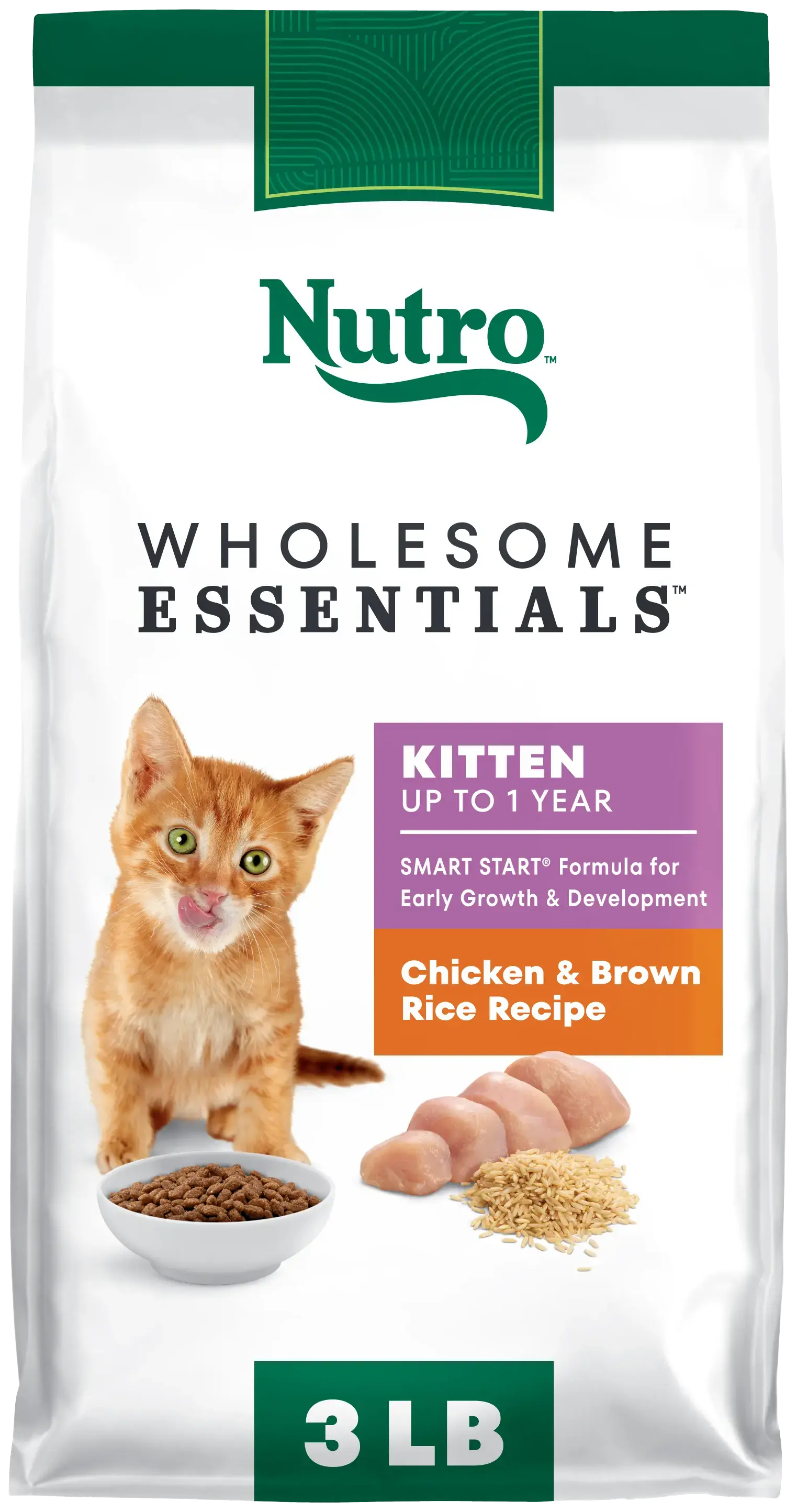
Nutro Wholesome Essentials Chicken & Brown Rice Early Development Kitten Dry Cat Food 3-lb
Nutro Wholesome Essentials Early Development Kitten Food is a solid middle-ground option, balancing 36% protein with 460 kcal per cup. Chicken is the first ingredient, and the formula adds calcium for bone development plus DHA for brain and eye health, making it a well-rounded daily food rather than a specialty weight-gain diet.
3. IAMS Proactive Health Kitten Dry Cat Food - Chicken
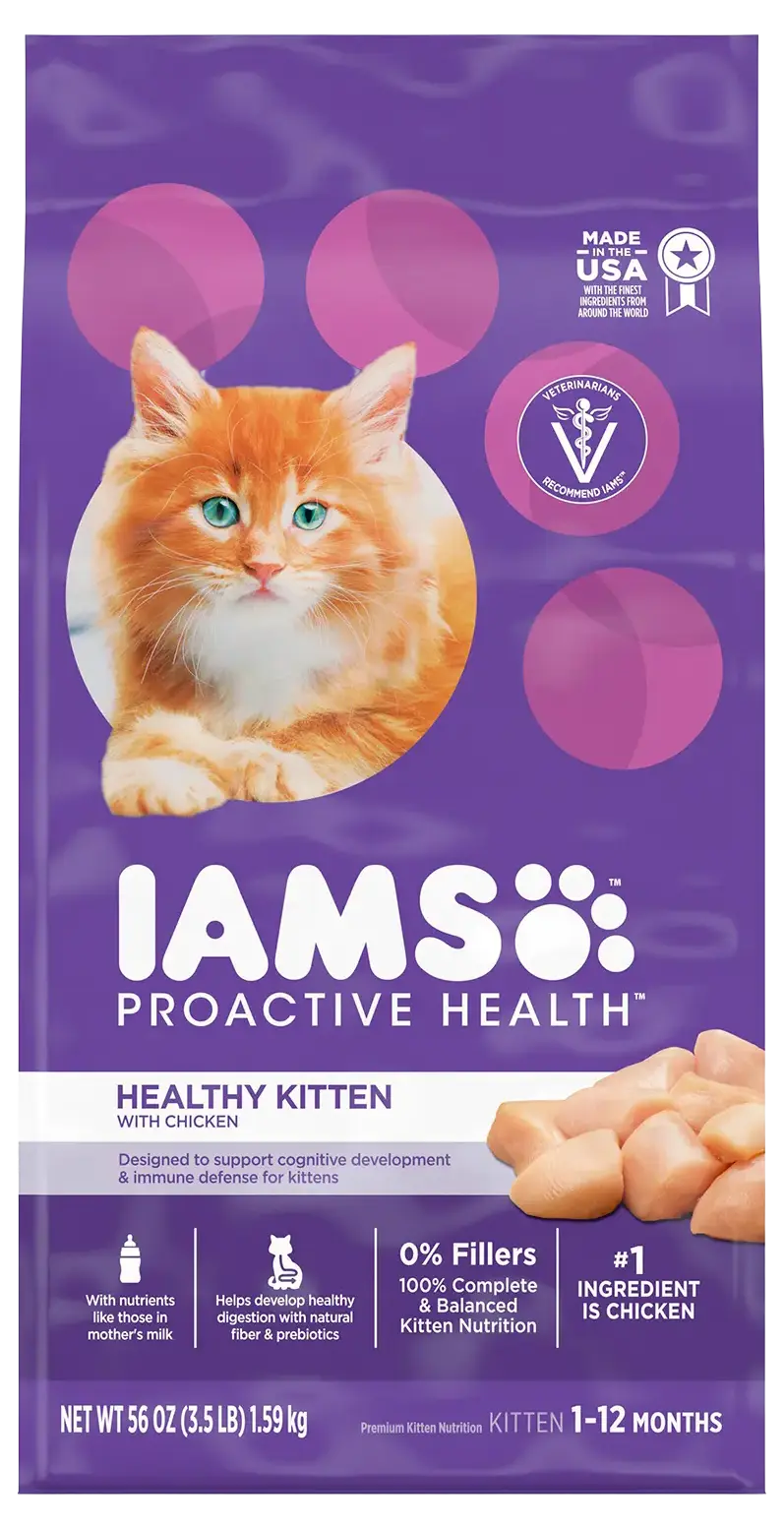
IAMS Proactive Health Kitten Dry Cat Food Chicken 3.5-lb
IAMS Proactive Health Healthy Kitten Dry Cat Food offers 484 kcal per cup and 33% protein in small, bite-sized kibble designed for young mouths. Nutrients modeled on mother's milk, plus vitamin E, support immune defenses during the growth window, while prebiotics and beet pulp help digestion keep pace with a bigger appetite.
4. Lucy Pet Formulas for Life - Salmon, Pumpkin & Quinoa

Lucy Pet Products Formulas for Life Dry Cat Food Salmon Pumpkin & Quinoa 4-lb
Lucy Pet Salmon, Pumpkin & Quinoa is a good fit for kittens with sensitive digestion because of its Prebiotic Balanced Fiber blend. Wild Alaskan salmon leads the ingredient list, and chickpeas and quinoa add complementary protein and fiber.
5. Wellness CORE Kitten - Deboned Turkey, Turkey Meal & Deboned Chicken
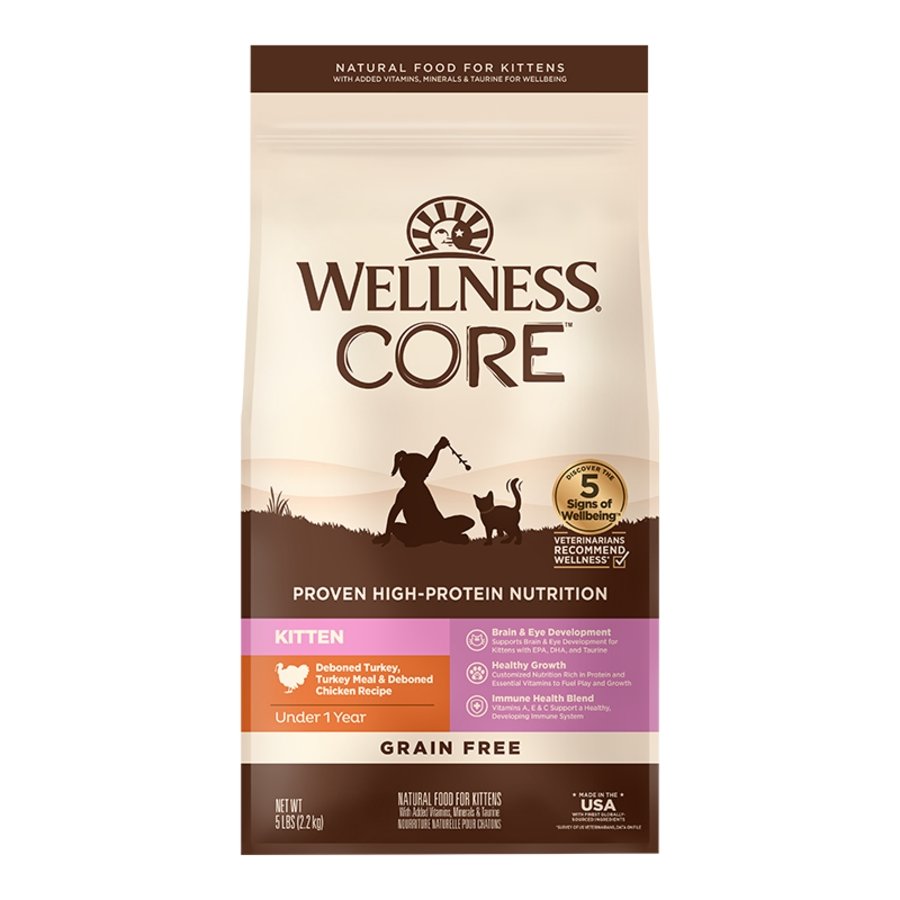
Wellness CORE Grain-Free Kitten Dry Cat Food Deboned Turkey, Turkey Meal & Deboned Chicken Recipe 5-lb
Wellness CORE Kitten has the highest protein on this list at 45% minimum, built from deboned turkey and chicken plus whitefish and salmon oil. Its 473 kcal per cup sits mid-pack, making it a strong choice for kittens who need serious muscle-building protein alongside steady, not explosive, calorie intake.
| KWIK TIP: While nutritionally complete, more than 45% of protein is too much for healthy kittens. Excessive protein can stress developing kidneys. Use only under veterinary guidance. |
What Practical Feeding Strategies Can You Adopt to Help Your Kitten Grow Healthily?
Choosing the right bag of food is only half the equation because how you feed it matters too.
- Offer 3-4 measured meals per day. A kitten feeding chart can help you determine appropriate daily portions based on your kitten’s age, weight, and growth needs. VCA recommends, "Most kittens do best when their total daily portion of food is divided into 3-4 small meals or more each day, which reduces the volume of food consumed at one time."
- Mix in wet food (in Moderation). A spoonful of wet kitten food adds moisture, palatability, and extra calories without bulking up dry kibble portions.
- Feed away from other pets. A separate, quiet feeding station stops a shy kitten from losing meals to a more assertive housemate.
- Warm the food slightly. Lightly warming wet food or moistened kibble can boost aroma and appeal for a picky eater.
- Weigh weekly. Use a kitchen scale to track grams gained, not just visual impressions, so slow progress gets caught early.
When to Call the Vet Immediately?
Most thin kittens respond well to diet changes within a couple of weeks. Call your vet right away if you notice:
- No weight gain after 2 weeks on a calorie-appropriate diet combined with portion control.
- Diarrhea, vomiting, or a visibly pot-bellied appearance alongside thinness.
- Lethargy, hiding, or a drop in normal playfulness.
- Refusing food for more than 24 hours.
- Visible ribs or spine despite consistently finishing meals.
- Rapid weight gain or visible obesity (fat pads around abdomen, difficulty moving) despite portion-controlled feeding.
These signs can point to parasites, infection, or another condition that food alone won't fix.
Conclusion
Healthy growth in kittens comes down to picking an appropriate nutrient-dense formula (30-40% protein, 450-500 kcal/cup), practicing portion-controlled feeding (3-4 meals per day, not free-choice), and monitoring growth. Start there, track progress weekly, and most kittens bounce back onto a normal growth curve within a few weeks. Most importantly, remember that optimal (slow, steady) growth is healthier than maximal (rapid) growth and prevents obesity in adulthood.
Browse the full range of kitten food at Kwik Pets to find a formula that matches your kitten's needs.


