


📌 KWIK SUMMARY
A kitten's daily food amount depends on their age and weight, requiring roughly 130 to 400 calories a day, plus at least 30% crude protein under AAFCO Growth standards. Weigh kittens weekly, check the feeding label on your product, and plan a gradual switch to adult food around 10-12 months.
Newborn kittens nurse or bottle-feed every 2-3 hours; by 6 months, eating 3 meals a day is standard, dropping to 2 meals between 6 months and a year, per Cornell Feline Health Center. A 2-month-old kitten needs 130-160 calories daily. Match portions to a kitten feeding chart, then confirm amounts with your vet.
| Veterinary Disclaimer: This article is for informational purposes only and does not constitute veterinary advice. Always consult a licensed veterinarian before changing your pet's diet, starting supplements, or treating health conditions. |
What Does a Kitten Feeding Chart by Age and Weight Look Like?

Use this quick-reference kitten feeding chart by age and weight as your starting point, then adjust based on your kitten's individual body condition. Every kitten grows at a slightly different pace, so treat these numbers as guidelines rather than fixed rules.
| Age | Approx. Weight | Meals/Day | Food Type |
| 0-2 weeks | 3.5-7 oz (100-200 g) | 8-12 (every 2-3 hrs) | Nursing or kitten milk replacer (KMR). |
| 2-4 weeks | 7-14 oz (200-400 g) | 6-8 | Kitten Milk Replacer plus weaning gruel. |
| 4-8 weeks | 1-2 lbs (0.5-0.9 kg) | 4-6 | Wet and dry kitten food, softened. |
| 2-4 months | 2-5 lbs (0.9-2.3 kg) | 3-4 | Kitten wet/dry food. |
| 4-6 months | 5-8 lbs (2.3-3.6 kg) | 3 | Kitten wet/dry food. |
| 6-12 months | 8-10+ lbs (3.6-4.5+ kg) | 2-3 | Kitten wet/dry food, prepping for adult transition. |
Weight ranges are general estimates and vary by breed. Large breeds like Maine Coons often stay on kitten food longer than 12 months.
| KWIK TIP: Always weigh your kitten weekly and confirm portions against the feeding guide on your specific product's label. |
What Is the Right Kitten Feeding Schedule? (Week-by-Week & Month-by-Month)
A kitten feeding schedule changes constantly during the first year because growth rate, stomach size, and nutrient needs shift fast. Below is a stage-by-stage breakdown to pair with the chart above.
0-4 Weeks: Nursing & Bottle Feeding
Newborn kittens nurse or bottle-feed frequently during week one, gradually stretching to 4 to 6 times a day. Kittens should gain about 7-15 grams (roughly 1/4 to 1/2 ounce) daily, with some healthy kittens gaining up to 20 grams. Never substitute cow's milk, as it causes diarrhea in most kittens.
If a kitten misses a feeding window or feels cold to the touch, contact a veterinarian promptly, since neonatal kittens cannot regulate body temperature on their own. Daily weight checks with a gram scale are the most reliable way to confirm a kitten is getting enough milk during this stage.
4-8 Weeks: The Weaning Phase
Weaning typically begins around 4 weeks and wraps up by 6-8 weeks, when kittens shift fully from milk to solid food. Vets recommend introducing both wet and dry kitten food around 5-6 weeks, letting kittens explore texture and flavor at their own pace.
Feed 4-6 small meals a day during this window, softening dry kibble with warm water or broth if a kitten struggles to chew.
2-4 Months: Rapid Growth Phase
This is the fastest growth window of a kitten's life, so meals stay frequent with 3 to 4 times daily. Kittens at this stage also begin core vaccinations, making it a good time to schedule a wellness exam alongside a diet check.
Free access to fresh water matters as much as food at this stage. Monitor body condition weekly: Ribs should be easy to feel but not visible.
4-6 Months: Steady Energy & Muscle Building
Kittens 4 months and younger generally eat 3 times a day; once past 4 months, many owners reduce to two feedings. This is also the typical spay/neuter window, after which calorie needs can drop by roughly 20-30%, so portions may need trimming even as the kitten keeps growing.
Muscle and bone development are still active, so don't switch to adult food yet. Keep offering a kitten-formulated diet with adequate calcium and DHA to support this stage's skeletal and cognitive growth.
6-12 Months: Preparing for Adulthood
Kittens between 6 months and 1 year typically do well on 2 meals a day, according to the Cornell Feline Health Center. Growth slows noticeably compared to the first six months, though large or giant breeds may keep developing well past a year.
Watch weight trends closely during this phase. This is when overfeeding habits from the rapid-growth months most often catch up with a kitten. Most cats are ready for a gradual switch to adult food by 10-12 months, covered in detail later in this article.
Wet Food or Dry Food: What's the Right Balance?
Both wet and dry kitten food can meet AAFCO Growth standards, and most vets recommend offering a mix rather than picking just one.
- Wet food adds moisture that supports hydration and urinary health.
- Dry food is calorie-dense and helps support dental chewing habits as teeth come in.
A common approach is feeding 1 or 2 wet meals daily alongside measured dry food, rather than free-feeding dry kibble around the clock. Free-feeding at older kitten ages raises the risk of overeating. So, measured meals are generally the safer default past the weaning stage.
How Many Calories Does a Kitten Need Each Day?
"How much should my kitten eat" is best answered in calories per pound, since kittens burn energy far faster than adult cats — roughly 40–50 kcal per pound during peak growth, nearly double an adult's needs. Use this as a starting range, then confirm against your food's packaging, since calorie density varies by brand.
|
Kitten Weight |
Approx. Age |
Calories/Day (starting range) |
|---|---|---|
|
2 lb |
~2 months |
130–160 kcal |
|
3 lb |
~3 months |
200–240 kcal |
|
5 lb |
~4–5 months |
250–300 kcal |
|
8 lb |
~6–12 months |
320–400 kcal |
Ranges are starting points, not exact targets — always cross-check the feeding guide on your specific kitten food's label.
What Are the Best Kitten Food Picks at Kwik Pets?
Every kitten food below is formulated to meet the needs of your little pet. Pick based on your kitten's age, any sensitivities, and whether you're feeding wet, dry, or a mixed routine.
- IAMS Proactive Health Kitten Dry Cat Food is designed for a cat’s first year with chicken as the first ingredient, plus omega-3 DHA for brain development and prebiotics for digestive support, in a kibble sized for small mouths.
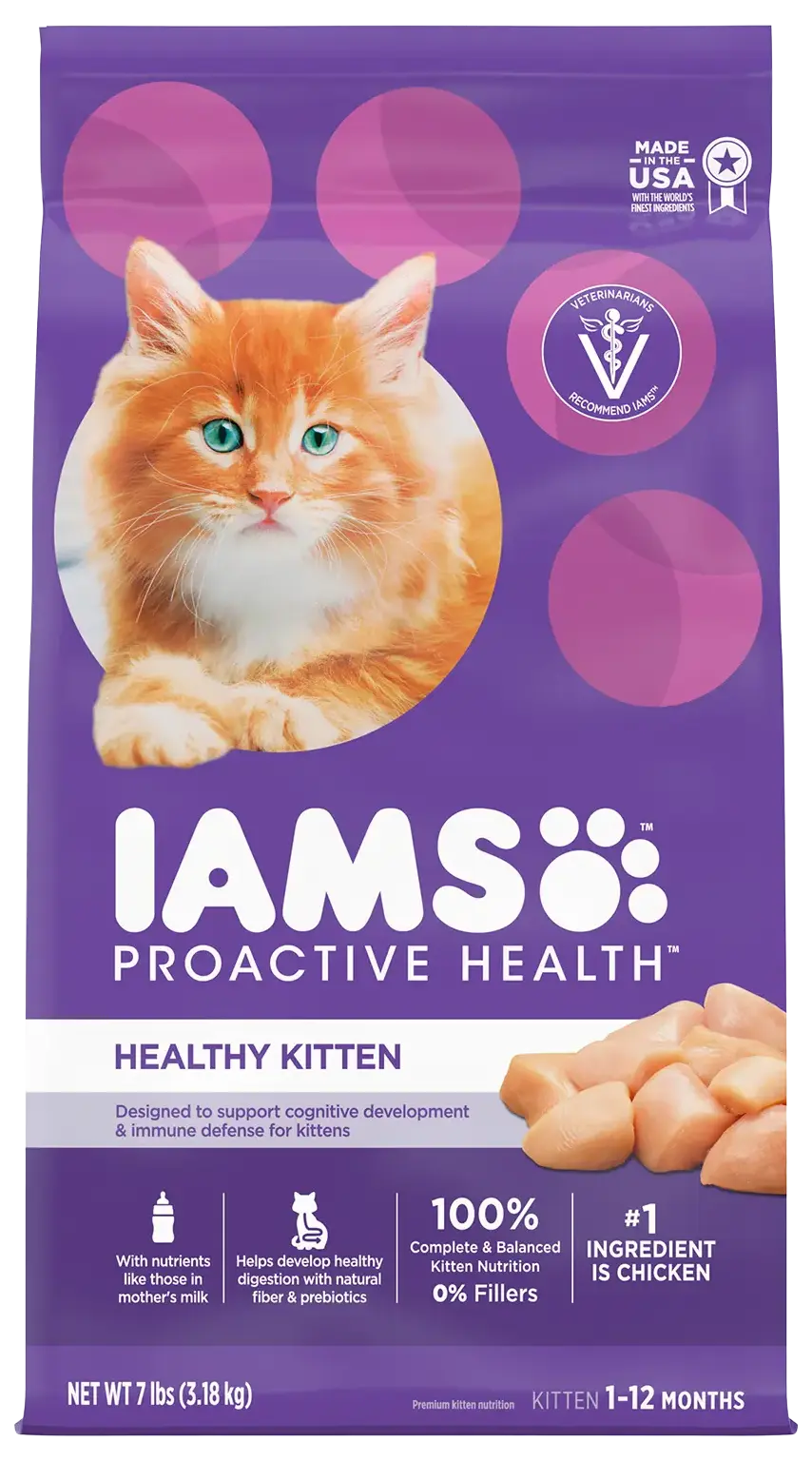
IAMS Proactive Health Kitten Dry Cat Food Chicken 7-lb
- Wellness CORE Tiny Tasters Grain-Free Kitten Pâté, Chicken is a single-use wet pouch built by vets and nutritionists for healthy growth, brain development, and eye health, ideal for fueling kittens’ best life.

Wellness CORE Tiny Tasters Grain-Free Kitten Pate Wet Cat Food Chicken 1.75-oz
- Tiki Cat Born Carnivore Baby Kitten Health, Deboned Chicken & Egg packs 42% minimum crude protein from real chicken, plus pumpkin for digestion and omega fatty acids from salmon oil and flaxseed.

Tiki Pets Cat Born Carnivore Baby Kitten Health Dry Cat Food Deboned Chicken & Egg 2.8-lb
- Natural Balance Ultra Protein Kitten, Real Chicken & Chicken Meal is a grain-free formula formulated specifically for kittens with real chicken as the #1 ingredient, chicken liver and chicken hearts for premium taste, protein to support strength and energy, whole-body health support from natural ingredients with added vitamins and minerals.
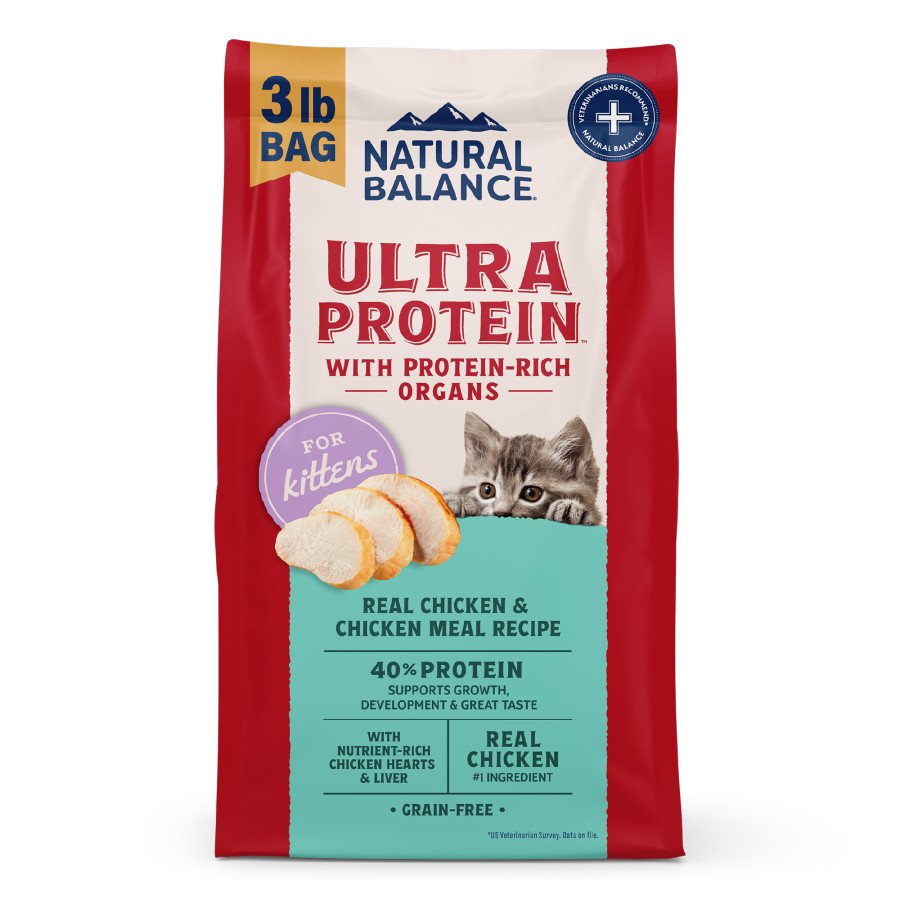
Natural Balance Ultra Protein Kitten Dry Cat Food Real Chicken & Chicken Meal 3-lb
- Nutro Wholesome Essentials Chicken & Brown Rice Early Development Kitten Food combines chicken as the top ingredient with added calcium for bone strength and DHA for brain and eye development, with no corn, wheat, or soy.
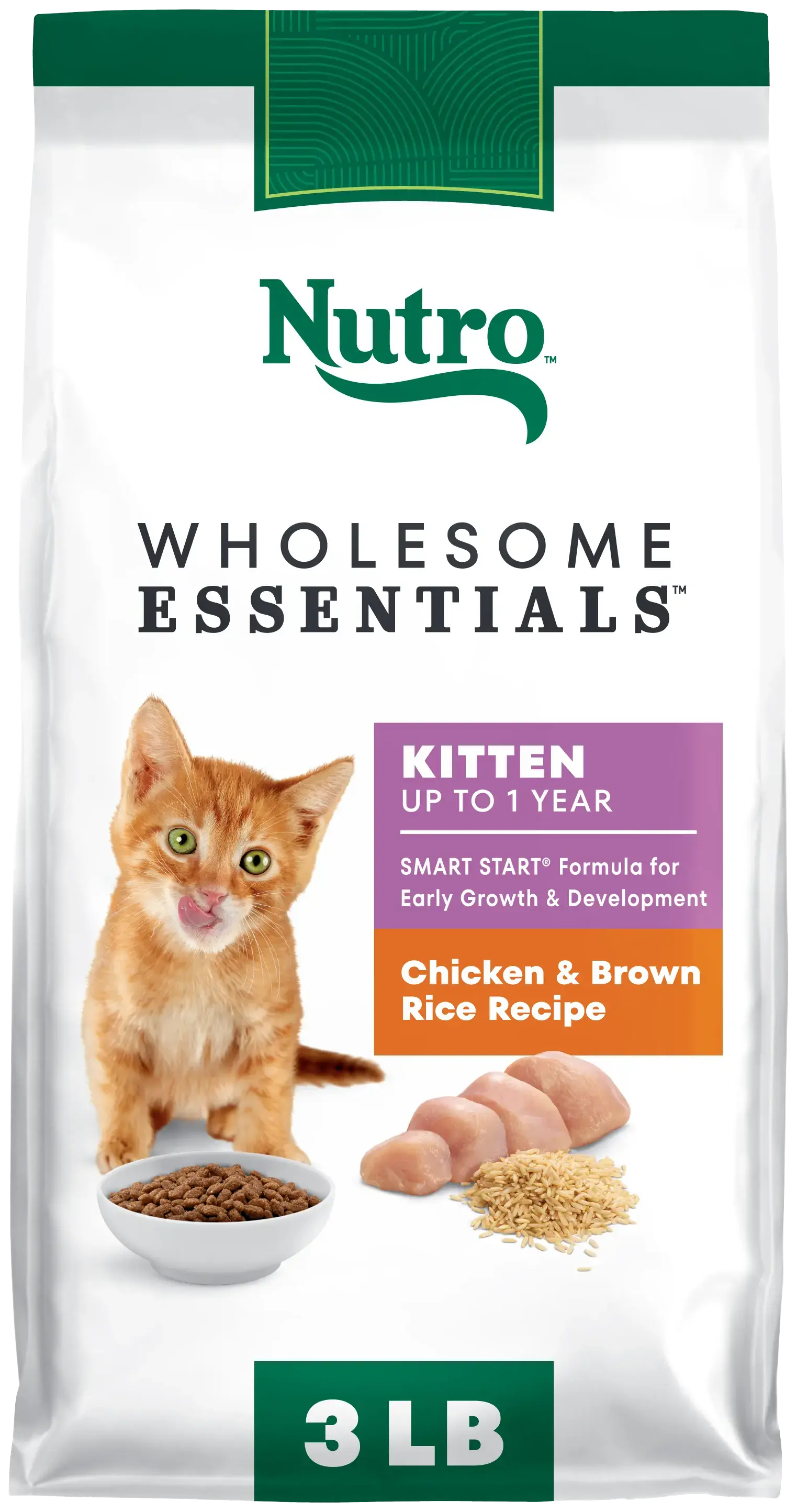
Nutro Wholesome Essentials Chicken & Brown Rice Early Development Kitten Dry Cat Food 3-lb
- Wellness CORE Grain-Free Kitten Food, Deboned Turkey, Turkey Meal & Chicken is a 100% natural, grain-free kitten food made with chicken, turkey, whitefish, salmon oil, and cranberries, fortified with antioxidants, probiotics, vitamins, minerals, and an omega blend for healthy skin and coat.

Wellness CORE Grain-Free Kitten Dry Cat Food Deboned Turkey, Turkey Meal & Deboned Chicken Recipe 5-lb
Comparison Table: Best Kitten Food Options At A Glance
| Product | Format | Crude Protein (min) | Standout Feature |
| IAMS Proactive Health Kitten Chicken | Dry | 33% | Small kibble size + prebiotics. |
| Wellness CORE Tiny Tasters Chicken Pâté | Wet | 9.5% | Single-use pouches, easy weaning food. |
| Tiki Cat Born Carnivore Baby Kitten | Dry | 42% | High protein, added pumpkin for digestion. |
| Natural Balance Ultra Protein Kitten | Dry | 40% | Grain-free, organ-forward recipe. |
| Nutro Wholesome Essentials Kitten | Dry | 36% | Calcium-boosted for bone development. |
| Wellness CORE Grain-Free Kitten Turkey & Chicken | Dry | 45% | Fortified with antioxidants, probiotics, vitamins and minerals. |
How Much Should My Kitten Eat Each Day?
“How much should my kitten eat” is best answered in calories per pound of body weight, since kittens burn energy far faster than adult cats.
In practice, that means a 2-pound kitten may need around 130-160 calories a day, while an 8-pound, nearly-grown kitten may need closer to 320-400 calories. These are starting points and not exact targets. Always cross-check the feeding guide on your specific kitten food's packaging, since calorie density varies by brand and formula.
How Do I Transition My Kitten to Adult Cat Food?
Most kittens are ready to transition to adult cat food between 10 and 12 months of age, though large breeds may need kitten food several months longer. Switching too early can shortchange a still-growing kitten on protein and calories.
Make the switch gradually over 7-10 days to avoid stomach upset, starting with about 75% old food and 25% new food for the first few days, then moving to a 50-50 mix, then 25% old to 75% new, before feeding the new food exclusively.
| KWIK TIP: Watch for loose stool, vomiting, or appetite changes during the switch. Slow the transition down if any of these appear. If digestive upset continues past a few days, pause the transition and consult your veterinarian. |
What Kitten Feeding Mistakes Should I Avoid?
- Free-feeding dry food indefinitely - Leads to overeating and weight gain once growth slows down.
- Switching foods too abruptly - Causes diarrhea or vomiting; always transition over 7-10 days.
- Feeding adult cat food too early - Under-delivers the protein and calories a growing kitten needs.
- Skipping the food label check - Buy kitten food labeled complete and balanced for "Growth" under AAFCO standards.
- Ignoring weight checks - Weekly weigh-ins catch under- or overfeeding before it becomes a bigger problem.
Conclusion
Feeding a kitten well comes down to matching meal frequency and calories to their age and weight, then adjusting as they grow. Use the kitten feeding chart above as your baseline, choose a kitten-appropriate food from the picks above, and check in with your veterinarian at each major milestone, especially around the 10-12 month mark, when it's time to plan the move to adult food.
Give your kitten the best start with age-appropriate nutrition. Shop Kwik Pets for high-quality food, kitten treats, and other feeding essentials.


