


📌 KWIK SUMMARY
Hairball treats for cats help reduce and prevent feline hairballs by combining dietary fiber and lubricating ingredients like petrolatum that help swallowed fur move safely through your cat's digestive tract. Choose a product suited to your cat’s needs, pair it with daily brushing and fresh water, and consult your vet if hairballs occur frequently.
The best hairball treats for cats combine fiber, such as psyllium husk or pumpkin, with gentle lubricants or digestive support to move swallowed fur through the gut. Used daily, they help prevent hairballs from forming and keep hair moving instead of collecting in the stomach.
| Veterinary Disclaimer: This article is for informational purposes only and does not constitute veterinary advice. Always consult a licensed veterinarian before changing your pet’s diet, starting supplements, or treating health conditions. |
Why Do Cats Get Hairballs?
Cats get hairballs because their tongues are covered in tiny backward-facing barbs that pull loose fur off the coat during grooming. Most swallowed hair passes through the digestive tract and ends up in the litter box. Whatever does not pass can collect in the stomach and eventually come back up as a tube-shaped clump.
What Are the Signs of Hairballs in Cats?

Normal Hairball Signs
Most cats will have an occasional hairball. While you may see some coughing, gagging, and small wet tubular hairballs on your rug, it is generally not a problem as long as they are still eating and active. The signs you may see include:
- Dry hacking or coughing that finishes with a hairball.
- Retching or gagging noises at strange times of the day.
- A tube-shaped clump of hair and fluid on the floor.
- Extra grooming and visible shedding around the house.
Red Flags to Watch For
Contact your vet if hairball signs change. Constant gagging without producing a hairball, constipation, lethargy, decreased appetite, and a distended, painful abdomen can all indicate an intestinal blockage, which can be an emergency.
What Ingredients Should You Look for in Cat Hairball Treats?
Look for fiber first in cat hairball treats, then a lubricant or skin-and-coat support, depending on whether you want daily prevention or help with hair that’s already swallowed. The label should name each active ingredient, not hide behind a vague “digestive blend.”
7 Best Hairball Treats, Chews, Gels & Toppers for Cats
1. NaturVet Hairball Aid Plus Pumpkin Soft Chews for Cats (60 count, 3.1-oz)
These are daily soft chews that support digestion and reduce hairball formation, formulated by veterinarians for cats over 12 weeks old. Each chew blends fiber and gentle digestion aids; the active ingredients are psyllium husk and pumpkin powder.
How to Use It as a Hairball Treat:
Technically, these are a supplement rather than a treat, but the soft chew texture makes them easy to hand out like one. Offer a chew by hand or on a plate.
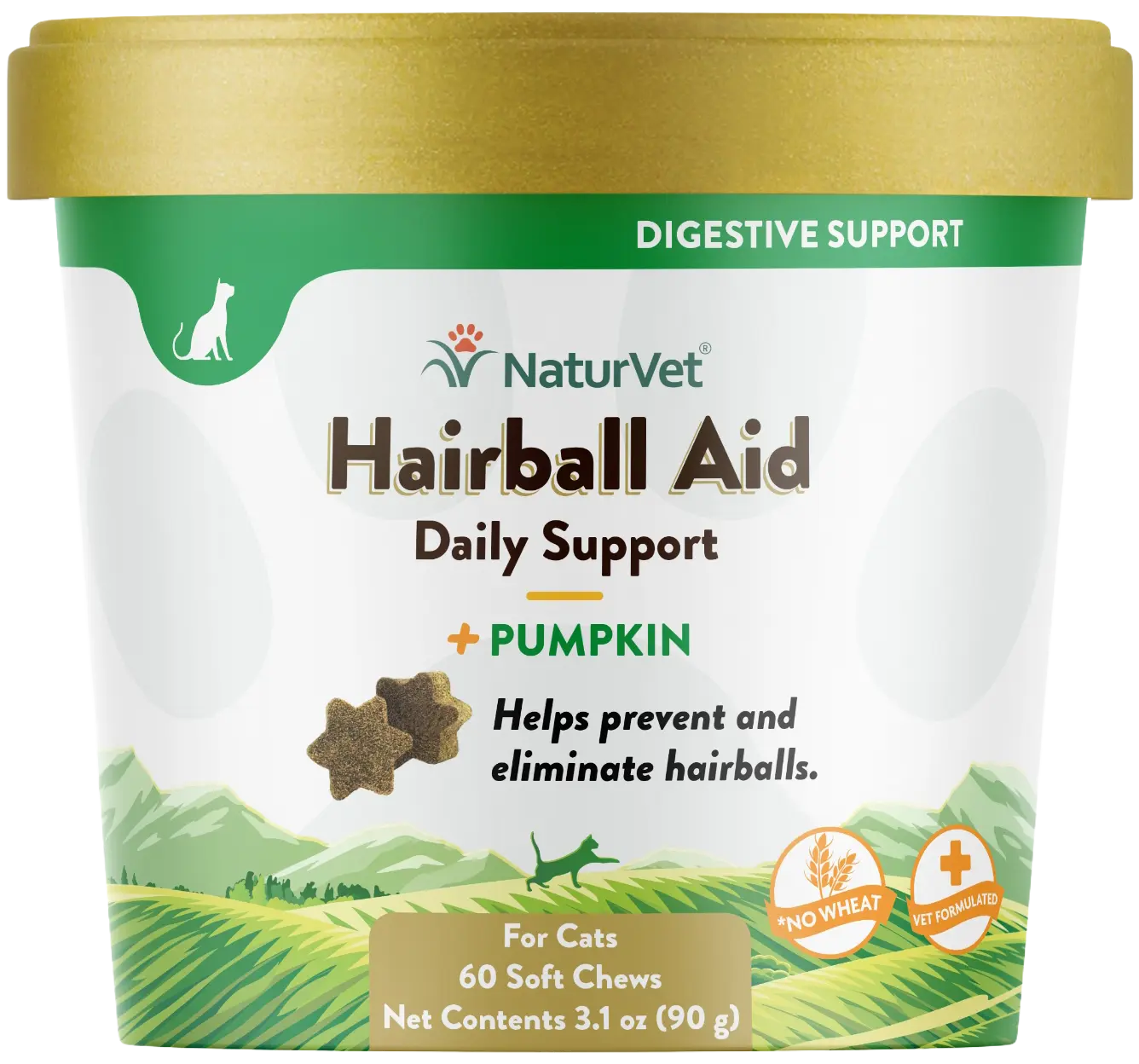
NaturVet Hairball Aid Plus Pumpkin Soft Chews for Cats 60 Count 3.1-oz
2. VetriScience Hairball Control Chews for Cats Chicken Liver (60 count, 3.17-oz)
Vet-formulated chews that help control hairballs at the source by minimizing them before they form and helping eliminate the ones that do. The hydrolyzed chicken-liver flavor is appealing to cats and appropriate for pets sensitive to proteins.
How to Use It as a Hairball Treat:
These chews are a supplement, not a true treat, though the chicken-liver flavor makes them easy to offer like one.

VetriScience Hairball Control Chews for Cats Chicken Liver 60 Count 3.17-oz
| KWIK TIP: These are bite-sized and easy to break, so you can crumble a chew over your cat’s regular food if your cat won’t take it plain. |
3. Pet Naturals Hairball Control Soft Chews for Cats (30 count, 1.59-oz)
These are chicken-liver-flavored chews to eliminate and prevent hairballs while supporting skin, coat, and GI health. They’re made without mineral oil or herbals, which can have side effects in cats.
How to Use It as a Hairball Treat:
Offer it as a soft chew, following the dosing directions on the pack. The chicken liver flavor makes it easy to hand over as a treat.

Pet Naturals Hairball Control Soft Chews for Cats 30 Count 1.59-oz
| KWIK TIP: Because it is a supplement, count it as part of your cat’s routine instead of an open-ended snack, and ask your vet if your cat has health concerns. |
4. Tiki Pets Cat Tummy Topper Pumpkin Puree with Wheatgrass Digestive Support Cat Food Topper (1.5-oz)
This product is a simple pumpkin and wheatgrass blend that promotes healthy digestion and soothes sensitive stomachs. Pumpkin puree supplies both soluble and insoluble fiber, which adds moisture and bulk to the digestive tract and helps hair move through smoothly. Wheatgrass is included to support digestion.
How to Use It as a Hairball Treat:
This is a food topper, not a treat, but you can serve it like one. Squeeze a small portion from the pouch into a bowl, or let your cat lick it straight from the pouch.

Tiki Pets Cat Tummy Topper Pumpkin Puree with Wheatgrass Digestive Support Cat Food Topper 1.5-oz
5. Weruva Puddy Pops Lickable Cat Treats Chicken & Pumpkin (0.5-oz tubes, 5 count)
A smooth, hydrating lickable treat made with cage-free chicken and pumpkin. It’s all-natural and free of gluten, carrageenan, wheat, corn, soy, and meat by-products. Pumpkin offers mild digestive and gentle fiber support, and the lickable texture adds moisture.
How to Use It as a Hairball Treat:
Offer it as a regular lickable treat or a meal topper. Tear open a tube and let your cat lick it directly, or spread it over food for variety.
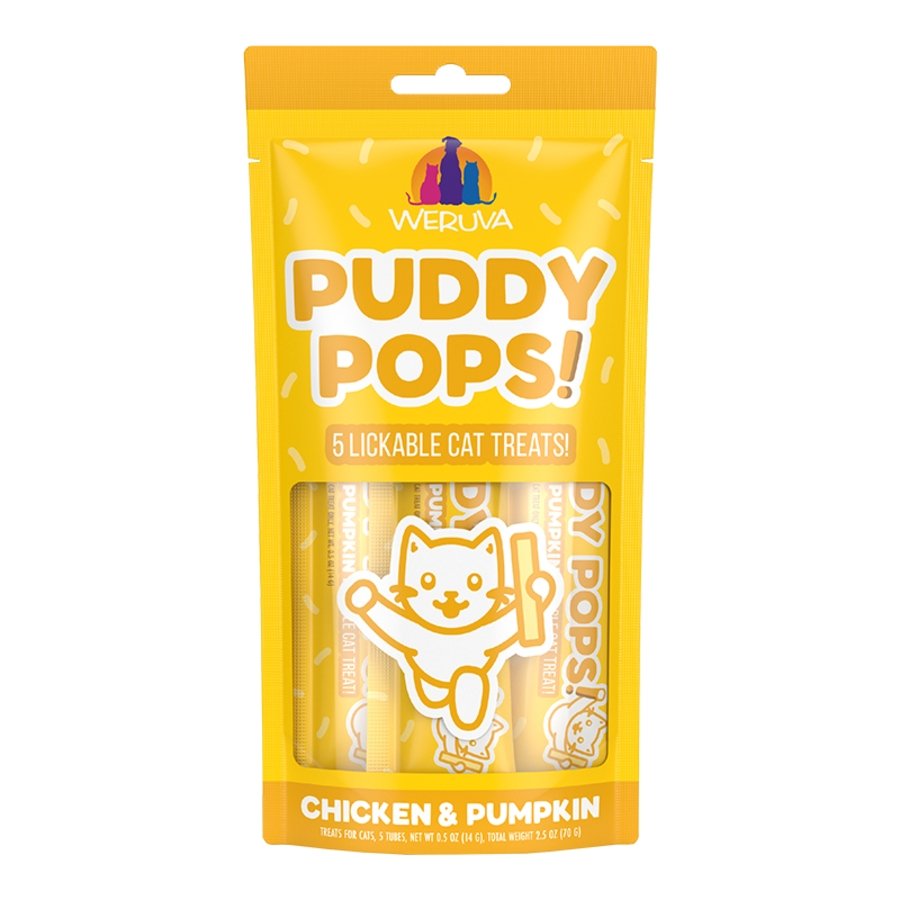
Weruva Puddy Pops Lickable Cat Treats Chicken & Pumpkin 0.5-oz Tubes 5 Count
| KWIK NOTE: Weruva markets Puddy Pops as a general hydrating treat, not a specialized hairball remedy, so expect mild support rather than a targeted fix. |
6. Dechra Cat Lax Hairball Control Gel for Cats (2-oz)
A palatable gel that helps eliminate and prevent hairballs. The formula combines cod liver oil, caramel, lecithin, malt syrup, and white petrolatum. White petrolatum is a non-digestible lubricant that coats swallowed hair so it slides through the gut instead of clumping into a hairball.
How to Use It as a Hairball Treat:
Cat Lax is a lubricant, not a food or a true treat, but it’s palatable enough to give like one. Offer the label’s amount on a spoon or let your cat lick it off your finger.
Dechra Cat Lax Hairball Control Gel for Cats 2-oz
| KWIK TIP: Extra servings of this product add nothing nutritionally because the petrolatum isn’t digested, so ask your vet before using it long term. |
7. SmartyKat Sweet Greens Cat Grass Seed Kit (1-oz)
An easy at-home grow kit for organic oat grass greens, great for aiding your cat’s digestion. Fresh oat grass gives cats fiber to chew, which may help hair move through the gut.
Some cats vomit after eating grass, which can bring up trapped hair. However, this is a side effect and shouldn’t be considered a benefit. Grass should be used as a supplementary aid.
How to Use It as a Hairball Treat:
Although this isn’t a treat, it can be used as one if your cat loves to graze. Just plant the seeds and make sure the soil is kept moist.
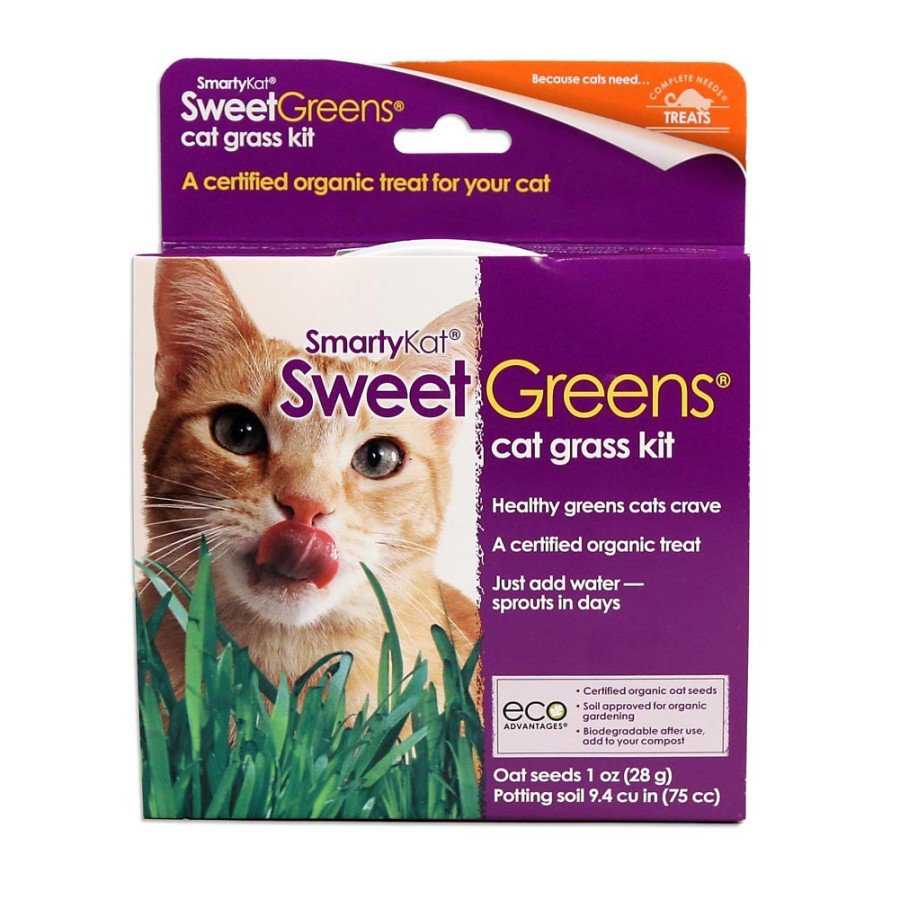
SmartyKat Sweet Greens Cat Grass Seed Kit 1-oz
How Do You Choose the Right Hairball Treat for Your Cat?
The best cat treats for hairballs match your cat’s needs: fiber for gut movement, fatty acids for coat health, or a lubricant gel for targeted help.
Check the ingredient list, confirm the product is made for cats, and pick a flavor your cat accepts. Start with one product and watch how your cat responds.
What Home and Supplement Routine Helps a Cat With Hairballs?
A simple routine beats a pile of products. Combine one hairball supplement or lubricant, a fiber topper or cat grass, and daily brushing.
- Brush daily: This removes loose hair rather than it getting into their stomach. Long-haired cats will benefit the most.
- Add a lubricant gel or fiber topper: Use a lubricant gel to help coat the ingested hair, or use fiber toppers such as pumpkin.
- Offer cat grass: Oat grass can provide a safe thing to chew and may help pass the hair.
How Hydration Boost Helps Treat Hairballs?
Fiber needs water to work. Without enough fluid, extra fiber can firm up stool and leave your cat constipated, which is the opposite of what you want.
Small changes add up quickly. Water fountains and multiple bowls around the house encourage more drinking, which keeps the added fiber moving instead of backing up.
When Should You Call a Vet?
If your cat is coughing but not bringing up hairballs, vomiting regularly, or refusing to eat, then you should contact your vet. Occasional hairballs are normal, but if your cat is struggling, lethargic, or constipated for more than a day, then this is not normal.
If your cat is gagging repeatedly without bringing anything up, has a bloated or sore stomach, or hasn’t eaten or had a bowel movement within 24 hours, then please visit your emergency vet immediately.
Conclusion
Start with hairball control treats for cats that fit your pet’s habits, brush daily, and keep fresh water available. A soft chew suits cats that eat on cue, a gel suits cats that already struggle, and a topper or grass kit suits cats that like to graze. Give any new product a few weeks, and call your vet if hairballs persist.
Ready to cut down on hairballs? Shop hairball treats for cats at Kwik Pets, or browse Kwik Pets’ hairball control food and deshedding brushes to build a full routine.


