


📌 KWIK SUMMARY
Dental cleaning for cats starts with regular toothbrushing with pet-specific toothpaste and a soft brush or gauze. Dental treats, chews, gels, and water additives can support daily oral care, but they should not replace brushing. If your cat has hardened tartar, bleeding gums, persistent bad breath, or other signs of dental disease, a professional cleaning under anesthesia may be necessary because home care cannot remove tartar below the gumline.
The most effective dental cleaning for cats combines brushing 3-4 times a week along with effective dental chews, dental treats, or water additives. AVMA notes that about 70% of cats show signs of periodontal disease by age three, and plaque hardens into tartar in as little as 3-5 days if left untouched. Start with a cat-safe toothbrush and flavored toothpaste for the best results.
Why Is Dental Cleaning Important for Cats?
Cats hide pain well, so dental disease often goes unnoticed until it's advanced. The Cornell Feline Health Center reports that between 50 and 90% of cats older than four years of age show some form of dental disease.
Left untreated, plaque bacteria don't just stay in the mouth. They can enter the bloodstream and put extra strain on the heart, liver, and kidneys. That's the real case for dental cleaning for cats; it isn't cosmetic maintenance. It's preventive medicine for the whole body, not just the teeth.
Signs of Dental Disease in Cats
Most cats won't yowl in pain even with a cracked tooth. You'll usually catch the signs of dental disease in cats through smaller behavior changes rather than obvious distress. Watch for these red flags:
- Bad breath that doesn't fade after a meal.
- Yellow or brown buildup along the gumline.
- Red, swollen, or bleeding gums.
- Dropping food or chewing on one side of the mouth.
- Reduced interest in dry food or hard treats.
- Pawing at the face or excessive drooling.
If you notice two or more of these, it's time for a vet exam rather than a wait-and-see approach.
Dental Care by Cat Age
- Kittens (up to 6 months): Kittens lose their baby teeth and get their adult teeth during this time. Focus on getting them used to having their face and mouth touched, and introduce toothpaste on your finger. It's never too early to start cleaning your kitten's teeth.
- Adults (1-6 years): Now is the time to establish a daily dental care routine and try some dental treats. Your cat's first dental exam by a veterinarian should be at this age, because dental disease often begins before owners notice any signs.
- Seniors (7+ years): Dental problems become much more common with age. Cornell Feline Health Center estimates that periodontal disease affects about 85 percent of cats over the age of six. Seniors continue to need regular oral exams at the vet, and you should bring your cat in for a checkup if you notice that your senior cat is less active, is pawing at his or her mouth, or has worsening breath.
How to Clean Your Cat's Teeth at Home?

Cat teeth cleaning at home doesn't have to be a wrestling match. Cats respond best to short, calm sessions built up gradually over a few weeks rather than a single dramatic attempt with a toothbrush on day one.
-
Start Slowly and Make Dental Care Positive
Begin by just touching your cat's face and lips daily so the contact feels normal. Once they're relaxed with that, dab a bit of cat-safe toothpaste on your finger and let them lick it off.
Only introduce the brush after they're comfortable with your finger in their mouth. Pair every step with a treat or praise.
-
Use a Cat-Safe Toothbrush and Toothpaste
Never use human toothpaste, as fluoride and xylitol are both unsafe for cats and can cause stomach upset or worse. Pick a soft-bristled cat toothbrush or a silicone finger brush, sized for a small mouth, and a poultry- or seafood-flavored toothpaste made specifically for cats.
How Often Should You Brush a Cat's Teeth?
How often you brush determines how much plaque actually gets removed before it hardens into tartar. Here's what each frequency realistically achieves:
- Once daily: This is the gold standard, as plaque gets removed before it has a chance to mineralize into tartar.
- 3-4 times a week: A realistic goal for most owners. It still meaningfully slows tartar buildup, even though it's not quite as effective as daily brushing.
- 1-2 times a week: Better than nothing, but plaque has enough time between sessions to start hardening in spots you miss.
- Less than once a week: Too infrequent to keep pace with plaque, which can start turning into tartar in as little as 3-5 days. At this frequency, dental treats or a water additive should fill the gap.
| KWIK TIP : A routine you actually stick to beats a random one you abandon after two weeks. Three sessions a week, every week, will do more for your cat's teeth than daily brushing that fizzles out by month two. |
Alternatives to Toothbrushing for Cats
Not every cat will tolerate a brush, and that's fine. Water additives, dental gels, and oral sprays offer a brush-free way to reduce plaque, usually by altering the mouth's pH or coating the teeth with an enzyme barrier. They won't replace brushing entirely, but they're a solid fallback for cats that won't cooperate no matter how patient you are.
Dental diets with a specific kibble texture can also provide light mechanical teeth cleaning for cats with each bite.
Dental Treats for Cats: Do They Actually Help?
Dental treats for cats can help, but only the ones with a texture or ingredient designed to work against plaque. Treats that carry the VOHC Seal of Acceptance have been independently reviewed for proven plaque or tartar reduction, which is the detail worth checking before you buy.
Treats supplement brushing, not a substitute for it. A cat getting daily treats but zero brushing will still build up tartar over time.
Cat Dental Chews: What to Look For?
Cat dental chews should be made specifically for a cat's smaller mouth and chewing habits, not just be smaller versions of dog dental chews. Look for a shape that forces repeated chewing rather than one bite and swallow, since the scraping action against the tooth surface is what actually helps.
- Low calorie count - Under 2-3 calories per treat keeps daily use from adding weight.
- Simple ingredient list - Avoid excess fillers, dyes, or added sugars.
Best Dental Products for Cats: Product Picks
Here are some of the best among cat dental care products to help you keep your cat’s mouth clean and healthy.
Best Cat Toothbrush & Toothpaste
1. Nylabone Advanced Oral Care Cat Dental Kit, Original is a cat-sized kit with an angled toothbrush and Denta-C toothpaste formulated to reduce plaque. The angled head is built to reach a cat's small mouth.
Benefits:
- Angled brush head designed specifically for small feline mouths.
- Ultra-soft nylon tips clean between teeth without irritating gums.
- Original flavor most cats accept without a fight.

Nylabone Advanced Oral Care Cat Dental Kit Original 2.5-oz 3 Count
2. TropiClean Fresh Breath Odor & Tartar Control Chicken Dental Kit is a dual-ended toothbrush and finger brush set paired with chicken-flavored toothpaste. The chicken flavor tends to win over reluctant cats faster than mint or plain formulas.
Benefits:
- Chicken flavor encourages cooperation from picky cats.
- Dual-ended design gives you a finger brush and a toothbrush in one kit.
- Eliminates odor-causing bacteria at the source.
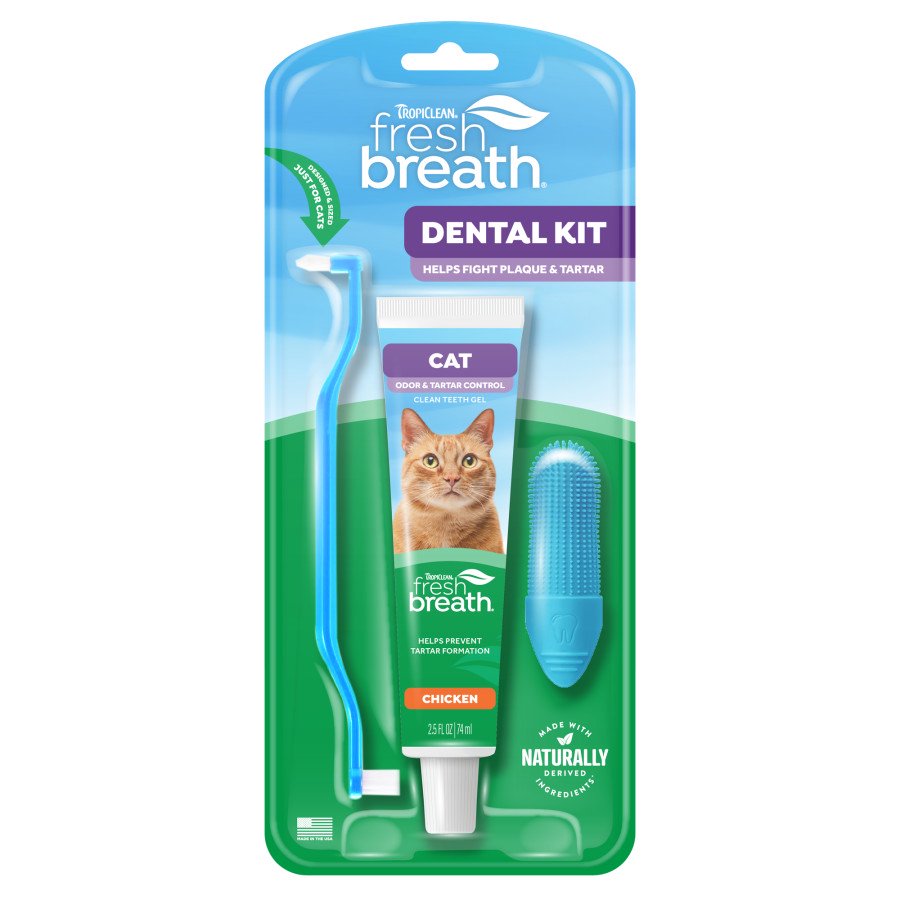
TropiClean Fresh Breath Odor & Tartar Control Chicken Dental Kit for Cats 2.5-oz
3. Virbac C.E.T. Enzymatic Cat Dental Kit, Seafood is a complete starter kit with a fingerbrush, mini-toothbrush, and enzymatic seafood-flavored toothpaste.
Benefits:
- A complete kit with everything a cat needs.
- Seafood flavor appeals to cats that reject mint or poultry options.
- Includes both a fingerbrush and mini-toothbrush for a gradual introduction.
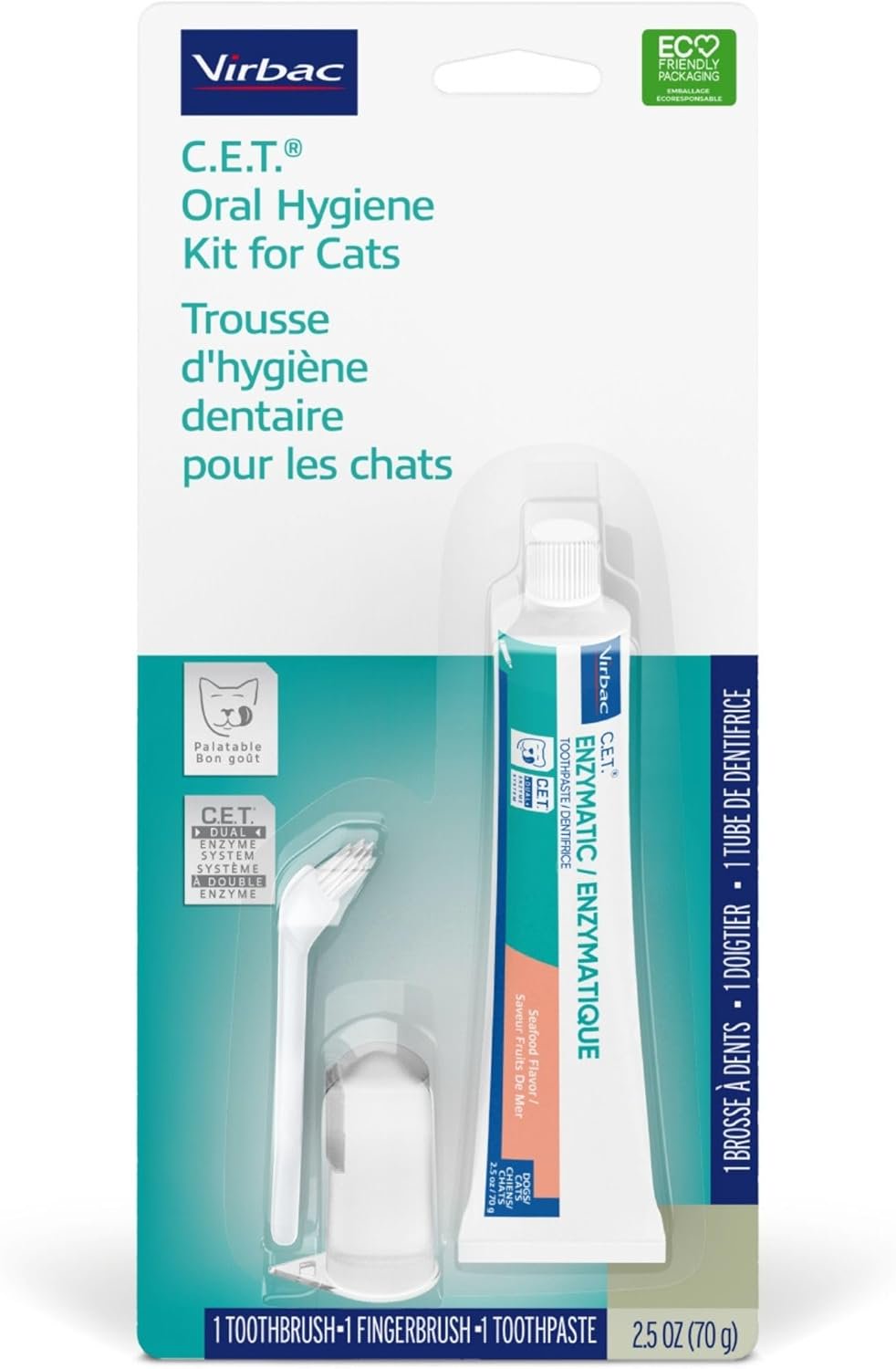
Virbac C.E.T. Enzymatic Dog & Cat Dental Kit Seafood Flavor 2.5-oz
Best Dental Treats for Cats
1. Whimzees Natural Dental Treats, Chicken & Tuna are shaped to work like a toothbrush across the areas vets check most: plaque, tartar, gums, and breath.
Benefits:
- Works like a toothbrush with every bite.
- Targets the four areas vets check most: breath, plaque, tartar, and gums.
- Complete and balanced formula for adult cats.

Whimzees Natural Dental Treats for Cats Chicken & Tuna 4.5-oz
2. Greenies Feline Oven Roasted Chicken Dental Treats are crunchy cat treats designed to clean down to the gumline with fewer than two calories each. The low calorie count means you can offer them daily as part of a routine without worrying about weight gain.
Benefits:
- Crunchy texture cleans down to the gumline.
- Fewer than two calories per treat, safe for daily use.
- Made with natural ingredients plus added vitamins and minerals.

Greenies Feline Oven Roasted Chicken Adult Cat Dental Treats 9.75-oz
Best Cat Dental Chews
1. NaturVet ProDen PlaqueOff Soft Chews are built around 100% natural kelp, shown in clinical trials to help reduce plaque, tartar, and bad breath.
Benefits:
- Made from 100% natural, sustainably harvested kelp.
- Helps reduce plaque and tartar.
- Helps improve bad breath.
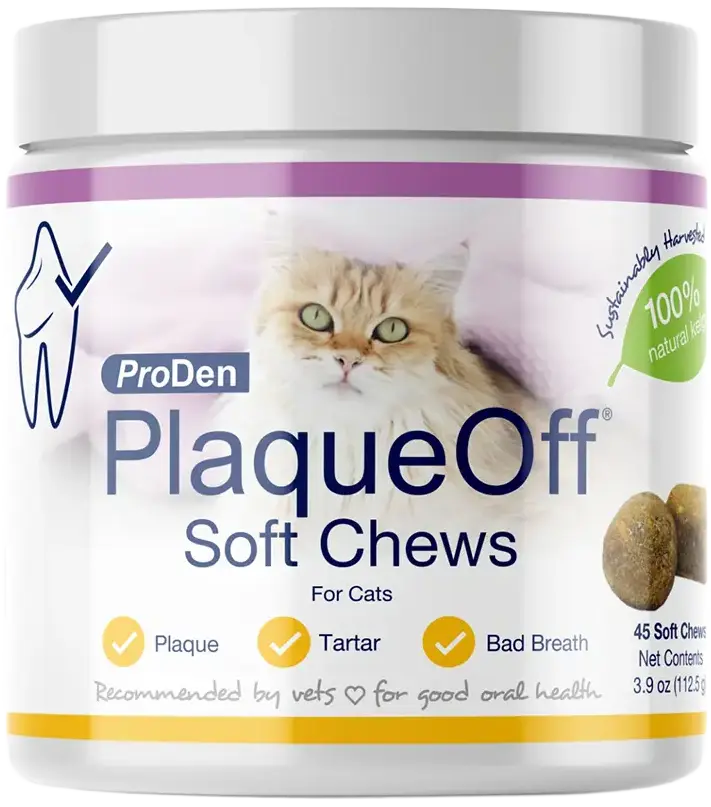
NaturVet Proden PlaqueOff Soft Chews for Cats 45 Count 3.9-oz
2. VetriScience Healthy Mouth Bites, Perio Plus are dual-action chews formulated for daily use to help control plaque and freshen breath. They're designed as a daily habit rather than an occasional treat, so consistency is where they earn their keep.
Benefits:
- Dual-action formula targets both plaque and breath odor.
- Formulated specifically for daily, ongoing use.
- Dental healthy mouth bites.

VetriScience Healthy Mouth Bites Perio Plus Dental Chews for Cats 60 Count 4.23-oz
Best Dental Spray, Gel Products or Water Additives
1. MAXI/GUARD Dental Cleansing Spray is a zinc ascorbate/taurine spray formulated as an oral cleanser and freshener without brushing. It's gentle enough for daily use and has an acceptable taste that most cats tolerate.
Benefits:
- Works without any brushing required.
- Zinc ascorbate/taurine formula cleanses and freshens in one step.
- Safe and well-tolerated for daily use.
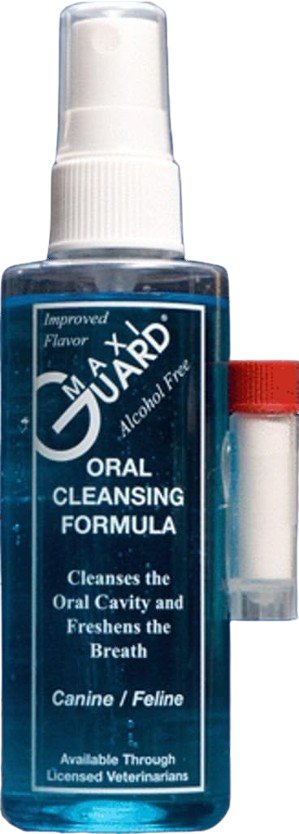
MAXI/GUARD Dental Cleansing Spray for Dogs, Cats & Horses 4-oz
2. TropiClean Fresh Breath Oral Care Gel is a natural gel that removes and defends against plaque and tartar with once-daily application. No brushing is required, which makes it a realistic option for cats who won't sit still for a toothbrush.
Benefits:
- Natural blend removes and defends against plaque and tartar.
- Once-daily application fits easily into an evening routine.
- No brushing needed, ideal for brush-resistant cats.
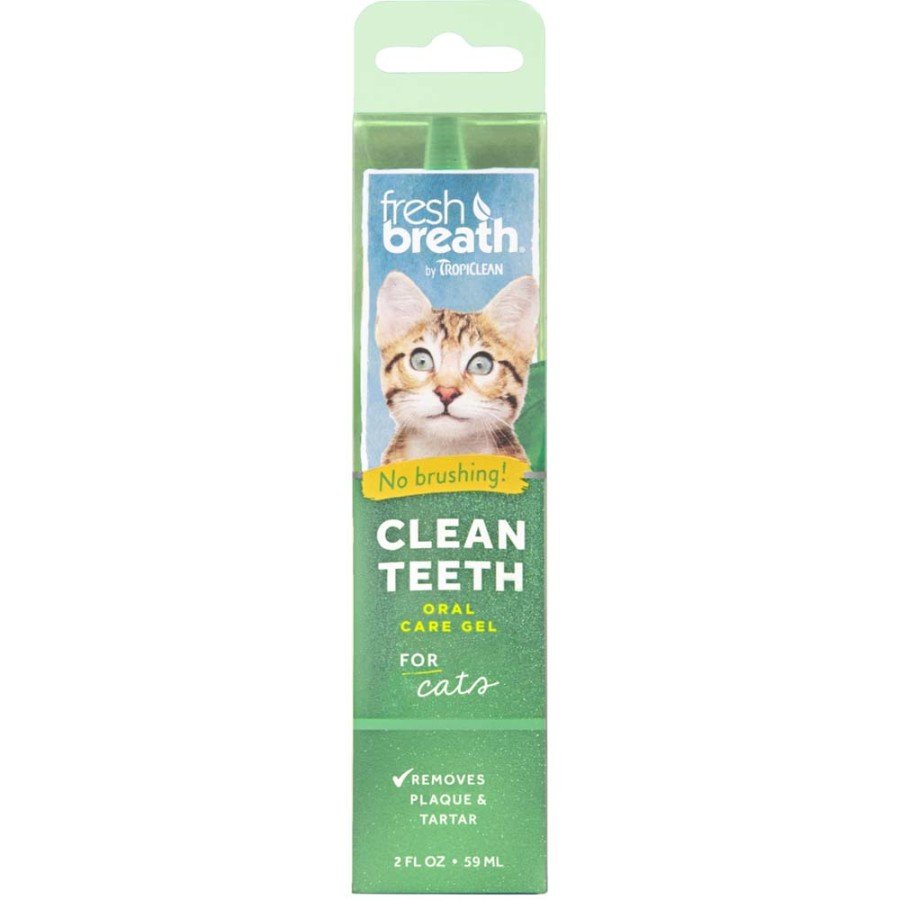
TropiClean Fresh Breath Oral Care Gel for Cats 2-oz
3. TropiClean Fresh Breath Water Additive is a VOHC-accepted, odorless and tasteless additive that reduces plaque and tartar buildup.
Benefits:
- VOHC-accepted for proven plaque and tartar reduction.
- Odorless and tasteless, so picky cats won't notice it.
- Brush-free way to keep teeth clean.
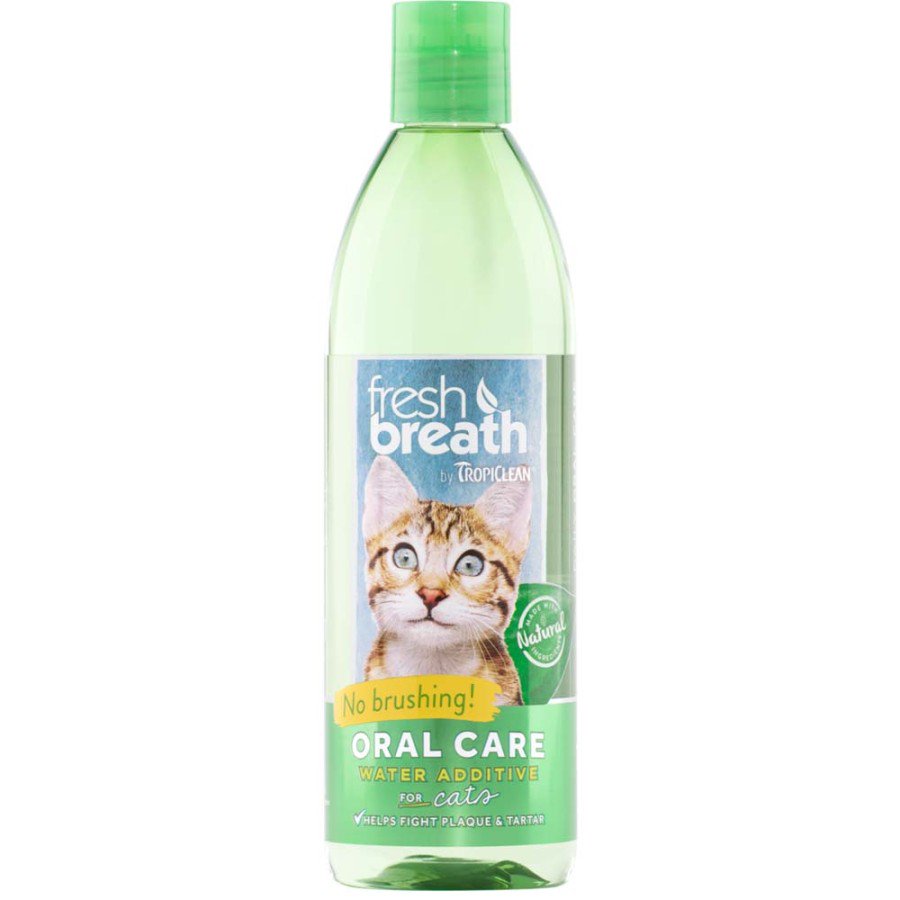
TropiClean Fresh Breath Oral Care Water Additive for Cats 16-oz
How to Build a Cat Dental Cleaning Routine?
A dental cleaning for cats routine works best when it's layered:
Brushing as the core habit, treats or chews filling the gaps, and an annual vet exam catching anything home care misses.
Sample Weekly Dental Care Routine
| Day | Activity |
| Monday | Brush teeth |
| Tuesday | Dental treat |
| Wednesday | Brush teeth |
| Thursday | Dental chew |
| Friday | Brush teeth |
| Saturday | Water additive or gel |
| Sunday | Rest day, face/mouth handling only |
Common Mistakes to Avoid When Cleaning a Cat's Teeth
- Using human toothpaste - Fluoride and xylitol are toxic risks for cats.
- Moving too fast - Skipping the taste-and-touch stages leads to a cat that fights the brush permanently.
- Brushing only the front teeth - The back molars accumulate the most tartar.
- Giving up after one bad session - Most cats need two to four weeks of gradual exposure before tolerating a full brushing.
- Treating dental treats as a full replacement for brushing - They reduce plaque; they don't eliminate it.
When Does Your Cat Need a Professional Dental Cleaning?
Home care slows plaque, but it can't undo damage that has already happened. A professional cleaning is the next step if your cat has brown teeth, persistent bad breath, bleeding gums, or regularly drops food. A yearly oral exam helps catch problems before they reach this stage.
Why can't brushing remove hardened tartar?
Plaque is soft and can be brushed away. Tartar is mineralized and bonded to the tooth, and much of it sits under the gumline where no brush or treats can reach.
What happens during a vet dental cleaning:
- Pre-anesthetic check: Your vet examines your cat and usually runs blood tests to plan the anesthesia.
- General anesthesia: Your cat is kept still and comfortable, and the airway is protected with a breathing tube.
- Dental X-rays: Many problems, such as tooth root disease, can't be seen on the surface.
- Scaling and polishing: Plaque and tartar are removed above and below the gumline, and each tooth is checked.
- Treatment: Diseased or damaged teeth may need to be extracted.
Why anesthesia matters?
The American Animal Hospital Association notes that a proper cleaning removes plaque and tartar both above and below the gumline, and that cats need to be anesthetized to be cleaned, charted, and X-rayed safely. Cleaning without anesthesia can make teeth look better while leaving disease below the gumline untreated.
Conclusion
Teeth cleaning for your cat comes down to a simple formula: brush as often as your cat will allow, back it up with treats or chews, and don't skip the annual vet check. None of these steps needs to be perfect on their own; it's the combination, repeated consistently, that actually keeps tartar and gum disease from taking hold.
Explore cat dental products at Kwik Pets and find toothbrushes, dental treats, chews, gels, and water additives to support everyday oral health.


